The 2026 Ram 1500 and 2026 Ford F-150 are both full-size light-duty pickup trucks built for work, towing, hauling, commuting, winter traction, home projects, and weekend use. For pickup shoppers in northern New Jersey, the right choice depends on how the truck will be used most often: job-site work, towing, family duty, snow-day driving, highway commuting, outdoor recreation, or premium comfort. The short answer is that the 2026 Ford F-150 is the better choice if you want the highest available towing rating, the highest available payload rating, a hybrid option, onboard power availability, and the widest engine lineup, while the 2026 Ram 1500 is the better choice if you want a refined daily-driving truck, strong standard safety and driver-assist content, a comfortable cabin, useful payload capability, and available Hurricane twin-turbo power. This head-to-head comparison evaluates both trucks across capability, comfort, technology, and ownership dimensions to help northern New Jersey pickup shoppers identify the better fit for their specific use case.
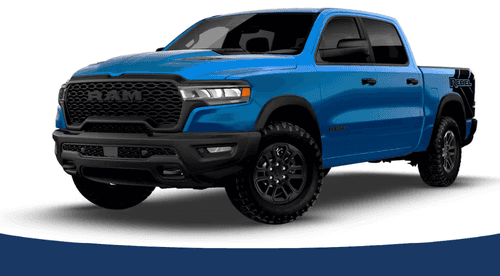
This pickup truck comparison covers the 2026 Ram 1500 and 2026 Ford F-150 as they apply to truck shoppers in northern New Jersey, including commuters, contractors, landscapers, tradespeople, homeowners, and families who need a capable full-size pickup for daily driving, seasonal weather, job-site work, and weekend use. Choose the 2026 Ram 1500 if you want a full-size pickup with a comfortable cabin, strong standard driver-assist features, available 12-inch or 14.5-inch Uconnect touchscreen technology, available Hurricane twin-turbo inline-six power, and a premium-truck lineup that reaches the Tungsten trim. Choose the 2026 Ford F-150 if you want maximum available towing and payload, more engine variety, available PowerBoost full hybrid power, available Pro Power Onboard, available Pro Trailer Hitch Assist, available Pro Trailer Backup Assist, and high-performance Raptor capability. For northern New Jersey contractors, landscapers, tradespeople, and home-improvement shoppers, the F-150 has the advantage for maximum towing and worksite productivity features, while the Ram 1500 remains highly useful for hauling tools, materials, equipment, and weekend gear with up to 2,360 pounds of available payload. For commuters and everyday pickup drivers, the Ram 1500 Big Horn has the fuel economy edge in the recommended trim comparison, with its standard 3.6L Pentastar V6 with eTorque listed at 20 city / 25 highway / 22 combined mpg with 2WD and 19 city / 24 highway / 21 combined mpg with 4WD, compared to the F-150 XLT’s standard 2.7L EcoBoost V6 at 19 city / 25 highway / 21 combined mpg with 2WD and 18 city / 23 highway / 20 combined mpg with 4WD. For winter driving, both trucks can be strong choices when equipped with 4WD, with Ram offering 4WD-focused trims such as Warlock, Rebel, RHO, Limited, Limited Longhorn, and Tungsten, and Ford offering 4WD-focused trims such as Tremor and Raptor. This Ram 1500 vs. Ford F-150 pickup truck comparison is scoped specifically for northern New Jersey buyers evaluating full-size light-duty pickups for daily driving, work use, towing, winter conditions, and weekend hauling needs, and is most relevant to buyers shopping in Bergen, Morris, Passaic, and surrounding counties.
The 2026 Ram 1500 is a full-size light-duty pickup truck offered in Tradesman, Express, Warlock, Big Horn, Lone Star, Laramie, Rebel, RHO, Limited, Limited Longhorn, and Tungsten trims. It offers Quad Cab and Crew Cab configurations, seating for 5 or 6 depending on configuration, and gasoline engines that include the 3.6L Pentastar V6 with eTorque and Hurricane twin-turbo inline-six engines. The 2026 Ford F-150 is a full-size light-duty pickup truck offered in XL, STX, XLT, Lariat, Tremor, King Ranch, Platinum, and Raptor trims, with Regular Cab, SuperCab, and SuperCrew configurations depending on trim, seating for 3 to 6 passengers depending on configuration, and gasoline, hybrid, and high-performance powertrain choices. A light-duty pickup is designed for everyday work, towing, hauling, commuting, and personal use rather than heavy-duty commercial towing; two-wheel drive, or 2WD, sends power to one axle, while four-wheel drive, or 4WD, can send power to all four wheels for better traction in snow, mud, gravel, wet job sites, and low-grip conditions; payload refers to how much weight the truck can carry in the cabin and bed, while towing capacity refers to how much trailer weight the truck can pull when properly equipped. Understanding these definitions is essential for any Ram 1500 vs. Ford F-150 pickup truck comparison, because capability ratings only matter in context of how a buyer intends to use the vehicle.
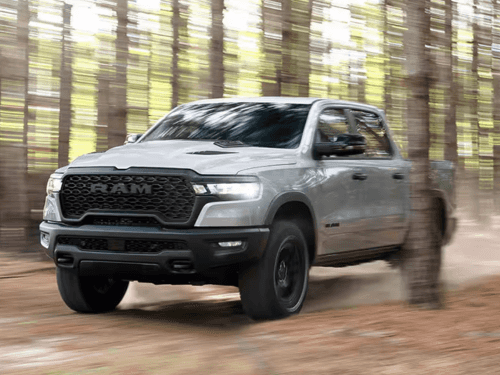
The 2026 Ram 1500 is a full-size light-duty pickup truck offered in Tradesman, Express, Warlock, Big Horn, Lone Star, Laramie, Rebel, RHO, Limited, Limited Longhorn, and Tungsten trims. It offers Quad Cab and Crew Cab configurations, seating for 5 or 6 depending on configuration, and gasoline engines that include the 3.6L Pentastar V6 with eTorque and Hurricane twin-turbo inline-six engines.
The 2026 Ford F-150 is a full-size light-duty pickup truck offered in XL, STX, XLT, Lariat, Tremor, King Ranch, Platinum, and Raptor trims, with Regular Cab, SuperCab, and SuperCrew configurations depending on trim, seating for 3 to 6 passengers depending on configuration, and gasoline, hybrid, and high-performance powertrain choices.
For a practical Ram 1500 vs. Ford F-150 pickup truck comparison, the 2026 Ram 1500 Big Horn and the 2026 Ford F-150 XLT represent the best head-to-head match for northern New Jersey buyers who want real-world utility without stepping into luxury or specialty off-road pricing. These trims sit above the most basic work-truck level while remaining practical for daily driving, towing, errands, home projects, landscaping, contracting, and weekend use. Both offer 2WD standard with 4WD available, seating for up to 6 depending on configuration, modern infotainment, and access to important truck capability — making them the most relevant reference point for the majority of pickup shoppers in Bergen, Morris, Passaic, and surrounding counties.
| Category | 2026 Ram 1500 Big Horn | 2026 Ford F-150 XLT | Winner |
|---|---|---|---|
| Segment | Full-size light-duty pickup | Full-size light-duty pickup | Tie |
| Listed starting price | $52,625 | $48,490 | F-150 |
| Seating | 5 or 6 depending on configuration | Up to 6 | Tie |
| Cab configurations | Quad Cab or Crew Cab availability varies by trim | SuperCab or SuperCrew on XLT | Depends on configuration |
| Bed lengths | 5-ft 7-in or 6-ft 4-in availability varies by cab and trim | 5.5-ft or 6.5-ft on XLT | Depends on configuration |
| Standard engine | 3.6L Pentastar V6 with eTorque | 2.7L EcoBoost V6 | Depends on preference |
| Horsepower | 305 hp | 325 hp | F-150 |
| Torque | 271 lb-ft | 400 lb-ft | F-150 |
| Transmission | 8-speed automatic | 10-speed automatic | Depends on preference |
| Drivetrain | 2WD standard, 4WD available | 2WD standard, 4WD available | Tie |
| Fuel economy, standard engine | 2WD: 20 / 25 / 22 mpg; 4WD: 19 / 24 / 21 mpg | 2WD: 19 / 25 / 21 mpg; 4WD: 18 / 23 / 20 mpg | Ram |
| Max available towing | Up to 11,610 lbs | Up to 13,500 lbs | F-150 |
| Max available payload | Up to 2,360 lbs | Up to 2,440 lbs | F-150 |
| Center display | Uconnect 5 with 8.4-inch touchscreen | 12-inch center display | F-150 |
| Driver-assistance suite | Adaptive Cruise Control with Stop and Go, Active Lane Management, Auto High-Beam Headlamp Control, and more listed as standard | Ford Co-Pilot360 technologies; availability varies by trim | Ram for clearly defined standard content |
| Trailering and towing technology | Trailer Sway Damping, Blind Spot Monitoring with Trailer Detection, ParkView Rear Back-Up Camera, ParkSense Front and Rear Park Assist | Available Pro Trailer Hitch Assist and Pro Trailer Backup Assist | F-150 for trailer-assist automation; Ram for standard trailer-detection support |
| Best for | Comfort, standard driver-assist content, fuel economy in this trim comparison | Towing, torque, engine variety, technology, trailer-assist features | Depends on buyer priority |
The table verdicts translate into clear buyer consequences across several dimensions. On cab configurations, both trucks offer strong crew-cab options well suited to families and contractors — the choice between Quad Cab, Crew Cab, SuperCab, and SuperCrew depends on whether passenger space or bed utility is the higher priority for your specific use. On bed lengths, the F-150 holds a meaningful advantage for buyers who need maximum bed length: while the XLT offers 5.5-ft and 6.5-ft beds, the broader F-150 lineup includes an 8.0-ft bed option not available on the Ram 1500 in this comparison, giving Ford the clear edge for buyers who regularly carry lumber, long tools, or bulky equipment. On the standard engine, the F-150’s 2.7L EcoBoost V6 delivers 325 horsepower and 400 lb-ft of torque versus the Ram’s 3.6L Pentastar V6 with eTorque at 305 horsepower and 271 lb-ft of torque, making the F-150 the stronger choice for towing, acceleration, and merging; the Ram’s engine, however, returns better fuel economy in this trim comparison (22 combined mpg vs. 21 combined mpg with 2WD), making it the more efficient choice for daily commuters. On transmission, the F-150’s 10-speed automatic offers more gear ratios for optimizing power delivery and efficiency across a wider range of driving conditions, while the Ram’s 8-speed automatic is well suited to full-size pickup duty — the real-world difference is modest for most buyers. On driver-assistance content, the Ram 1500 wins this dimension outright: it lists a comprehensive standard suite that includes Adaptive Cruise Control with Stop and Go, Active Lane Management, Blind Spot Monitoring with Trailer Detection, Full-Speed Forward Collision Warning Plus, Pedestrian and Cyclist Emergency Braking, ParkView Rear Back-Up Camera, and ParkSense Front and Rear Park Assist, while Ford’s Co-Pilot360 feature availability varies by trim and is not uniformly standard across the XLT. The Best for row reflects buyer priority rather than a single winner: the Ram 1500 Big Horn is the better choice for comfort, fuel economy, and standard safety depth, while the F-150 XLT is the better choice for towing, torque, technology, and trailer-assist capability. In this recommended trim comparison, the Ford F-150 XLT wins on capability and work features, while the Ram 1500 Big Horn wins on comfort, efficiency, and standard safety content.
The Ford F-150 XLT has more standard horsepower and torque. Its standard 2.7L EcoBoost V6 makes 325 horsepower and 400 lb-ft of torque. The Ram 1500 Big Horn’s standard 3.6L Pentastar V6 with eTorque makes 305 horsepower and 271 lb-ft of torque.
The F-150’s 2.7L EcoBoost V6 delivers 325 horsepower and 400 lb-ft of torque versus the Ram’s 3.6L Pentastar V6 with eTorque at 305 horsepower and 271 lb-ft of torque, making the F-150 the stronger choice for towing, acceleration, and merging.
The 2026 Ford F-150 can tow more. It is listed with up to 13,500 pounds of maximum available towing with the available 3.5L EcoBoost V6 when properly equipped. The 2026 Ram 1500 is listed with up to 11,610 pounds of maximum towing when properly equipped.
The Ford F-150 has the higher maximum available payload rating. It is listed at up to 2,440 pounds with the available 3.5L EcoBoost V6 when properly equipped. The Ram 1500 is listed at up to 2,360 pounds of available payload depending on configuration.
The Ram 1500 Big Horn gets better listed fuel economy with its standard engine. It is listed at 20 city / 25 highway / 22 combined mpg with 2WD and 19 city / 24 highway / 21 combined mpg with 4WD. The F-150 XLT’s standard 2.7L EcoBoost V6 is listed at 19 city / 25 highway / 21 combined mpg with 2WD and 18 city / 23 highway / 20 combined mpg with 4WD.
The Ram’s engine returns better fuel economy in this trim comparison (22 combined mpg vs. 21 combined mpg with 2WD), making it the more efficient choice for daily commuters.
Both trucks offer strong crew-cab options well suited to families and contractors — the choice between Quad Cab, Crew Cab, SuperCab, and SuperCrew depends on whether passenger space or bed utility is the higher priority for your specific use.
On bed lengths, the F-150 holds a meaningful advantage for buyers who need maximum bed length: while the XLT offers 5.5-ft and 6.5-ft beds, the broader F-150 lineup includes an 8.0-ft bed option not available on the Ram 1500 in this comparison, giving Ford the clear edge for buyers who regularly carry lumber, long tools, or bulky equipment.
Both trucks can be strong winter choices when equipped with 4WD. The Ram 1500 is especially appealing in Warlock, Rebel, and RHO form. The Ford F-150 is especially appealing in Tremor and Raptor form. Proper tires remain important for either truck in northern New Jersey winter conditions.
The Ford F-150 Raptor is the strongest high-performance off-road option in this comparison, especially with its FOX shock technology, available 37-inch all-terrain tires, Baja drive mode, and available Raptor R supercharged V8. The Ram 1500 RHO is Ram’s strongest performance and off-road choice in this comparison, with the Hurricane High Output engine, widebody performance styling, advanced off-road hardware, and performance-focused cabin content.
The Ford F-150 has the advantage in the recommended trim comparison because the XLT includes a 12-inch center display, while the Ram 1500 Big Horn includes an 8.4-inch Uconnect touchscreen. Higher Ram trims close the gap, and the Ram 1500 Tungsten stands out with a 14.5-inch touchscreen and a 10.25-inch front-passenger interactive display.
The F-150 is better for towing if you want the highest available tow rating or Ford’s available trailer-assist systems, including Pro Trailer Hitch Assist and Pro Trailer Backup Assist. The Ram 1500 is still a capable towing truck and includes Trailer Sway Damping and Blind Spot Monitoring with Trailer Detection as standard.
The Ram 1500 has the clearer standard driver-assist advantage because the data lists features such as Adaptive Cruise Control with Stop and Go, Active Lane Management System, Auto High-Beam Headlamp Control, Blind Spot Monitoring with Rear Cross-Path and Trailer Detection, ParkView Rear Back-Up Camera, and ParkSense Front and Rear Park Assist as standard. The F-150 offers Ford Co-Pilot360 technologies with availability varying by trim, plus available BlueCruise on select trims.
The Ram 1500 wins this dimension outright: it lists a comprehensive standard suite that includes Adaptive Cruise Control with Stop and Go, Active Lane Management, Blind Spot Monitoring with Trailer Detection, Full-Speed Forward Collision Warning Plus, Pedestrian and Cyclist Emergency Braking, ParkView Rear Back-Up Camera, and ParkSense Front and Rear Park Assist, while Ford’s Co-Pilot360 feature availability varies by trim and is not uniformly standard across the XLT.
The Ram 1500 Big Horn is the better choice for comfort, fuel economy, and standard safety depth, while the F-150 XLT is the better choice for towing, torque, technology, and trailer-assist capability.
This Ram 1500 vs. Ford F-150 pickup truck comparison is written for northern New Jersey truck buyers and covers full-size light-duty truck comparisons, trim selection guidance, and real-world capability considerations for contractors, families, and daily drivers in Bergen County, Passaic County, Morris County, and surrounding areas. The vehicle specifications, towing ratings, payload figures, fuel economy estimates, pricing, and feature availability cited throughout this comparison reflect the 2026 Ram 1500 and 2026 Ford F-150 trim and specification details presented here. Buyers should verify current pricing, available configurations, and feature content with a sales representative, as specifications and availability are subject to change based on manufacturer updates, trim availability, and regional configuration options. This comparison is intended to give northern New Jersey pickup shoppers a reliable, fact-based starting point for evaluating the 2026 Ram 1500 and 2026 Ford F-150 side by side.
Choosing between the 2026 Ram 1500 and 2026 Ford F-150 is most straightforward when you match each truck’s strengths to your specific use case, budget, and configuration needs.
Start by identifying your primary use: if maximum towing, maximum payload, hybrid power, or onboard worksite power is your top requirement, the F-150 is the stronger starting point; if daily comfort, standard driver-assist depth, refined cabin feel, or available Hurricane twin-turbo power matters most, start with the Ram 1500. Next, select the trim tier that fits your budget and feature needs: for work-truck value, compare the Ram 1500 Tradesman against the Ford F-150 XL, noting that the F-150 XL has the lower listed starting price and access to an 8.0-ft bed while the Ram Tradesman brings strong standard driver-assist and safety content; for mainstream daily use, compare the Ram 1500 Big Horn against the Ford F-150 XLT, where the Ram has better listed standard-engine fuel economy and stronger standard driver-assist content while the F-150 XLT has more horsepower, significantly more torque, a lower listed price, and a larger center display; for premium comfort, compare the Ram 1500 Limited, Limited Longhorn, or Tungsten against the F-150 King Ranch or Platinum; and for off-road and winter use, compare Ram Warlock, Rebel, and RHO against F-150 Tremor and Raptor. Then confirm your cab and bed configuration based on driveway size, parking needs, passenger requirements, and hauling habits, keeping in mind that a Crew Cab or SuperCrew with a shorter bed is easier to park and commute with in dense northern New Jersey areas, while a longer bed is more useful for contractors, remodelers, and buyers who carry lumber, tools, or equipment. Finally, weigh technology priorities: choose Ram if you value a premium Uconnect display path and clearly defined standard safety content, and choose Ford if you value trailer-assist automation, available BlueCruise hands-free highway driving, or available Pro Power Onboard. Following these steps in order will lead you to the truck that best fits your actual driving life rather than the one with the largest single specification number.
Contractors should compare the Ram 1500 Tradesman and Big Horn against the Ford F-150 XL and XLT. The F-150 has the lower listed starting price, higher maximum towing, higher maximum payload, and available trailer-assist and onboard power features. The Ram 1500 has strong standard driver-assist content, useful payload capability, and a comfortable cabin for daily work use.
The Ram 1500 Big Horn is a strong daily-and-weekend truck if you want better listed standard-engine fuel economy, a comfortable cabin, and strong standard driver-assist features. The F-150 XLT is a strong choice if you want more power from the standard engine, a larger center display, more engine options, and stronger towing and payload capability.
Both are full-size pickups, so configuration matters. A Crew Cab or SuperCrew with a shorter bed is easier to park and commute with than a longer-bed work configuration. A longer bed is more useful for hauling materials, tools, and equipment. Northern New Jersey buyers should choose cab, bed length, drivetrain, and engine around driveway space, parking needs, job-site access, winter driving, and towing requirements.
For northern New Jersey pickup shoppers, the right choice between the 2026 Ram 1500 and 2026 Ford F-150 depends directly on how the truck will be used. The 2026 Ford F-150 wins on maximum towing, maximum payload, standard-engine torque in the recommended trim comparison, lower listed pricing, engine variety, hybrid availability, trailer-assist technology, available onboard power, and Raptor performance — making it the stronger choice for buyers who need the highest work numbers, want hybrid capability, or require specialized off-road performance. The 2026 Ram 1500 wins for shoppers who prioritize comfort, standard driver-assist content, available premium cabin technology, Big Horn standard-engine fuel economy, available Hurricane twin-turbo power, and a more refined everyday truck character — making it especially well suited to homeowners, commuters, and contractors who want a capable, comfortable truck for daily driving, winter traction, home projects, and weekend hauling. In dense northern New Jersey areas, both trucks should be configured carefully: a Crew Cab or SuperCrew with a shorter bed is easier to park and commute with, while a longer bed is more useful for hauling materials, tools, and equipment. A truck that fits your driveway, trailer needs, job-site access, commuting route, and weekend plans will be the better long-term choice than one chosen only for the biggest maximum rating. For northern New Jersey buyers who need the strongest work numbers, the F-150 is the better choice; for buyers who want a comfortable, well-equipped, capable truck that serves equally well on a commute, a job site, and a snowy January morning, the Ram 1500 is a strong and competitive alternative.
The 2026 Ford F-150 is better overall for shoppers who want the highest towing and payload ratings, more engine choices, hybrid availability, and advanced trailer-assist technology. The 2026 Ram 1500 is better for shoppers who want a more comfort-focused truck with strong standard driver-assist content, available Hurricane twin-turbo power, and premium interior options.
The 2026 Ford F-150 can tow more. It is listed with up to 13,500 pounds of maximum available towing with the available 3.5L EcoBoost V6 when properly equipped. The 2026 Ram 1500 is listed with up to 11,610 pounds of maximum towing when properly equipped.
The Ford F-150 has the higher maximum available payload rating. It is listed at up to 2,440 pounds with the available 3.5L EcoBoost V6 when properly equipped. The Ram 1500 is listed at up to 2,360 pounds of available payload depending on configuration.
The Ford F-150 XLT has more standard horsepower and torque. Its standard 2.7L EcoBoost V6 makes 325 horsepower and 400 lb-ft of torque. The Ram 1500 Big Horn’s standard 3.6L Pentastar V6 with eTorque makes 305 horsepower and 271 lb-ft of torque.
The Ram 1500 Big Horn gets better listed fuel economy with its standard engine. It is listed at 20 city / 25 highway / 22 combined mpg with 2WD and 19 city / 24 highway / 21 combined mpg with 4WD. The F-150 XLT’s standard 2.7L EcoBoost V6 is listed at 19 city / 25 highway / 21 combined mpg with 2WD and 18 city / 23 highway / 20 combined mpg with 4WD.
The Ram 1500 data lists the 3.6L Pentastar V6 with eTorque and Hurricane twin-turbo inline-six engines, but it does not list a full hybrid Ram 1500 powertrain. The Ford F-150 offers an available 3.5L PowerBoost Full Hybrid V6.
The Ford F-150 has the advantage in the recommended trim comparison because the XLT includes a 12-inch center display, while the Ram 1500 Big Horn includes an 8.4-inch Uconnect touchscreen. Higher Ram trims close the gap, and the Ram 1500 Tungsten stands out with a 14.5-inch touchscreen and a 10.25-inch front-passenger interactive display.
The Ram 1500 has the clearer standard driver-assist advantage because the data lists features such as Adaptive Cruise Control with Stop and Go, Active Lane Management System, Auto High-Beam Headlamp Control, Blind Spot Monitoring with Rear Cross-Path and Trailer Detection, ParkView Rear Back-Up Camera, and ParkSense Front and Rear Park Assist as standard. The F-150 offers Ford Co-Pilot360 technologies with availability varying by trim, plus available BlueCruise on select trims.
The F-150 is better for towing if you want the highest available tow rating or Ford’s available trailer-assist systems, including Pro Trailer Hitch Assist and Pro Trailer Backup Assist. The Ram 1500 is still a capable towing truck and includes Trailer Sway Damping and Blind Spot Monitoring with Trailer Detection as standard.
Both trucks can be strong winter choices when equipped with 4WD. The Ram 1500 is especially appealing in Warlock, Rebel, and RHO form. The Ford F-150 is especially appealing in Tremor and Raptor form. Proper tires remain important for either truck in northern New Jersey winter conditions.
The Ford F-150 Raptor is the strongest high-performance off-road option in this comparison, especially with its FOX shock technology, available 37-inch all-terrain tires, Baja drive mode, and available Raptor R supercharged V8. The Ram 1500 RHO is Ram’s strongest performance and off-road choice in this comparison, with the Hurricane High Output engine, widebody performance styling, advanced off-road hardware, and performance-focused cabin content.
Contractors should compare the Ram 1500 Tradesman and Big Horn against the Ford F-150 XL and XLT. The F-150 has the lower listed starting price, higher maximum towing, higher maximum payload, and available trailer-assist and onboard power features. The Ram 1500 has strong standard driver-assist content, useful payload capability, and a comfortable cabin for daily work use.
The Ram 1500 Big Horn is a strong daily-and-weekend truck if you want better listed standard-engine fuel economy, a comfortable cabin, and strong standard driver-assist features. The F-150 XLT is a strong choice if you want more power from the standard engine, a larger center display, more engine options, and stronger towing and payload capability.
Both are full-size pickups, so configuration matters. A Crew Cab or SuperCrew with a shorter bed is easier to park and commute with than a longer-bed work configuration. A longer bed is more useful for hauling materials, tools, and equipment. Northern New Jersey buyers should choose cab, bed length, drivetrain, and engine around driveway space, parking needs, job-site access, winter driving, and towing requirements.


