This head-to-head comparison article evaluates the 2026 Jeep Wrangler against the 2026 Ford Bronco to determine which body-on-frame off-road SUV better serves northern New Jersey drivers who prioritize open-air freedom, winter traction, and weekend-adventure capability over conventional crossover comfort.
This comparison applies specifically to northern New Jersey SUV shoppers who are evaluating the 2026 Jeep Wrangler and 2026 Ford Bronco for use cases including commuting on Route 23, Route 46, Route 3, I-80, Route 17, I-287, the Garden State Parkway, and the New Jersey Turnpike; winter driving in snow, slush, wet leaves, and steep driveways across Sussex, Morris, Warren, and Passaic County; weekend recreation including beach trips, trail access, muddy parking areas, and gravel roads; daily errands in dense areas like Hoboken, Jersey City, Montclair, Ridgewood, Morristown, and Hackensack; and family duty requiring five-passenger seating, cargo space for sports equipment, camping gear, coolers, strollers, and luggage.
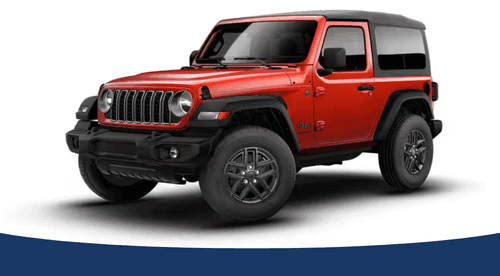
The 2026 Ford Bronco emerges as the stronger choice for shoppers who want more standard horsepower and torque (300 hp, 325 lb-ft), greater maximum cargo space (up to 83.0 cu ft with soft top), broader standard technology and driver-assistance features including Pre-Collision Assist with Automatic Emergency Braking, and the extreme off-road capability of the Bronco Raptor — while the 2026 Jeep Wrangler emerges as the stronger choice for shoppers who want the lower listed starting price ($36,035 vs. $40,495), Jeep Trail Rated heritage with Rock-Trac and Tru-Lok differentials on Rubicon trims, a standard 12.3-inch Uconnect touchscreen, stronger maximum towing capacity on select 4-door configurations (up to 5,000 lbs), and the available 470-horsepower 6.4L HEMI V8 in the Moab 392.
This comparison article delivers a definitive verdict by analyzing recommended trims, performance powertrains, fuel economy, cargo practicality, towing capacity, 4WD and off-road hardware, technology and connectivity, safety and driver assistance, ride character, and ownership considerations specific to northern New Jersey use cases including commuting on I-80 and the Garden State Parkway, winter driving in Sussex and Morris County, beach trips, trail riding, and daily errands.
The 2026 Jeep Wrangler is a body-on-frame open-air SUV offered in 2-door (four-passenger) and 4-door (five-passenger) configurations, with trims including Sport, Sport S, Willys, Sahara, Rubicon, Rubicon X, and Moab 392, and gasoline engine choices including a 3.6L Pentastar V6 (285 hp, 260 lb-ft), a 2.0L turbocharged inline-4 (270 hp, 295 lb-ft), and a 6.4L HEMI V8 on the Moab 392 (470 hp, 470 lb-ft).
The 2026 Ford Bronco is a body-on-frame off-road SUV offered in 2-door (four-passenger) and 4-door (five-passenger) configurations depending on trim, with trims including Base, Big Bend, Outer Banks, Badlands, Heritage Edition, Stroppe Edition, and Raptor, and engine choices including a 2.3L EcoBoost turbocharged inline-4 (300 hp, 325 lb-ft), an available 2.7L EcoBoost V6 on select trims (330 hp, 415 lb-ft), and a 3.0L EcoBoost V6 on Raptor (418 hp, 440 lb-ft).
A body-on-frame SUV uses a truck-like structure that is well-suited for rugged use. Four-wheel drive (4WD) is a drivetrain system that can send engine power to all four wheels for added traction in snow, mud, sand, gravel, and off-road conditions, and both the Wrangler and Bronco include 4WD as standard equipment. Towing capacity refers to how much trailer weight an SUV can pull when properly equipped, and it varies by trim, engine, and configuration. Cargo volume measures the interior storage space available behind the rear seat and the maximum cargo space with rear seats folded, expressed in cubic feet. These definitions establish the foundational terms and vehicle architectures that underpin the Wrangler vs. Bronco comparison for northern New Jersey shoppers evaluating open-air SUVs.
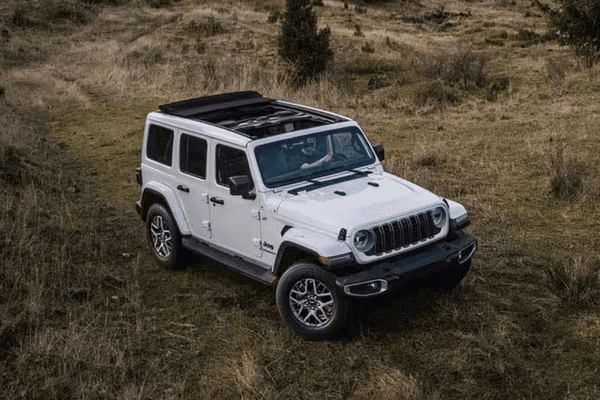
The 2026 Jeep Wrangler is a body-on-frame open-air SUV offered in 2-door (four-passenger) and 4-door (five-passenger) configurations, with trims including Sport, Sport S, Willys, Sahara, Rubicon, Rubicon X, and Moab 392, and gasoline engine choices including a 3.6L Pentastar V6 (285 hp, 260 lb-ft), a 2.0L turbocharged inline-4 (270 hp, 295 lb-ft), and a 6.4L HEMI V8 on the Moab 392 (470 hp, 470 lb-ft).
The 2026 Ford Bronco is a body-on-frame off-road SUV offered in 2-door (four-passenger) and 4-door (five-passenger) configurations depending on trim, with trims including Base, Big Bend, Outer Banks, Badlands, Heritage Edition, Stroppe Edition, and Raptor, and engine choices including a 2.3L EcoBoost turbocharged inline-4 (300 hp, 325 lb-ft), an available 2.7L EcoBoost V6 on select trims (330 hp, 415 lb-ft), and a 3.0L EcoBoost V6 on Raptor (418 hp, 440 lb-ft).
For a practical real-world Wrangler vs. Bronco comparison, we recommend evaluating the 2026 Jeep Wrangler Sport S 4-Door against the 2026 Ford Bronco Big Bend 4-Door. These trims are the right starting point for northern New Jersey SUV shoppers because both are 4-door, five-passenger, standard-4WD configurations priced near the same listed price point ($40,595 vs. $40,995), making them directly comparable for buyers who want open-air SUV capability without stepping into premium or extreme off-road territory. Both preserve the removable-roof SUV experience while remaining useful for commuting, errands, winter driving, passengers, and weekend gear, which is the balance most northern New Jersey buyers need.
The recommended trim comparison focuses on the 2026 Jeep Wrangler Sport S 4-Door ($40,595) and 2026 Ford Bronco Big Bend 4-Door ($40,995) because both are five-passenger, standard-4WD, near-identical-price configurations that balance open-air SUV personality with real-world practicality for commuting, passengers, winter driving, and weekend gear without jumping into premium or extreme off-road pricing.
| Category | 2026 Jeep Wrangler Sport S 4-Door | 2026 Ford Bronco Big Bend 4-Door | Winner |
|---|---|---|---|
| Segment | Body-on-frame open-air SUV | Body-on-frame open-air SUV | Tie |
| Listed starting price | $40,595 | $40,995 | Wrangler |
| Doors / seating | 4 doors / 5 passengers | 4 doors / 5 passengers | Tie |
| Drivetrain | 4WD standard | 4WD standard | Tie |
| Standard engine | 3.6L Pentastar V6 | 2.3L EcoBoost turbo inline-4 | Depends on preference |
| Horsepower | 285 hp | 300 hp | Bronco |
| Torque | 260 lb-ft | 325 lb-ft | Bronco |
| Transmission | 6-speed manual | 7-speed manual | Bronco for crawler-gear utility; Wrangler for simpler manual setup |
| Available automatic | 8-speed automatic with available 2.0L turbo | 10-speed automatic with 2.3L turbo | Depends on preference |
| Fuel economy, standard manual | 16 / 22 / 19 mpg | 18 / 21 / 19 mpg | Tie on combined mpg; Bronco city advantage |
| Best listed fuel economy in this comparison | 2.0L turbo automatic 4-door: 20 / 22 / 21 mpg | 2.3L automatic 4WD: 18 / 22 / 20 mpg | Wrangler |
| Towing capacity | 3,500 lbs; up to 5,000 lbs on select properly equipped 4-door configurations | 3,500 lbs | Wrangler for maximum available towing |
| Maximum cargo volume | 72.4 cu ft | Up to 77.6 cu ft with hard top / up to 83.0 cu ft with soft top | Bronco |
| Center display | 12.3-inch Uconnect touchscreen | 12-inch SYNC 4 touchscreen | Wrangler |
| Smartphone compatibility | Wireless Apple CarPlay and wireless Android Auto | Wireless Apple CarPlay and wireless Android Auto | Tie |
| Standard safety / driver assistance | ParkView Rear Back-Up Camera, stability control, roll mitigation, traction control, Advanced Brake Assist, Trailer Sway Control | Rear View Camera, AdvanceTrac with RSC, Trailer Sway Control, Auto High-Beam Headlamps, Pre-Collision Assist with Automatic Emergency Braking, Post-Collision Braking | Bronco for broader listed driver-assist content |
| Best for | Lower price, Jeep heritage, standard touchscreen size, maximum available towing | Power, torque, max cargo, standard tech/safety content | Depends on buyer priority |
The Ford Bronco Big Bend delivers stronger standard performance with 300 horsepower and 325 lb-ft of torque from its 2.3L EcoBoost turbocharged inline-4, which may feel more responsive when merging on I-80, Route 17, the Garden State Parkway, and I-287 compared to the Wrangler Sport S 4-Door’s 285-horsepower, 260-lb-ft 3.6L Pentastar V6. The Bronco’s torque advantage can be noticeable in stop-and-go traffic, steep northern New Jersey driveways, and low-speed trail crawling. However, engine preference genuinely depends on buyer priorities: the Wrangler’s naturally aspirated V6 and the Bronco’s turbocharged inline-4 each offer a different driving character, with the Bronco posting stronger standard city fuel economy (18 mpg vs. 16 mpg). Neither engine is objectively superior — the preference depends on the driving character you value.
Automatic transmission preference also depends on buyer priorities: the Wrangler’s available 8-speed automatic pairs with the optional 2.0L turbo (270 hp, 295 lb-ft) and delivers the best listed fuel economy in this comparison at 20 city / 22 highway / 21 combined mpg, while the Bronco’s 10-speed automatic pairs with the standard 2.3L turbo and offers more gear ratios across a wider speed range. The Bronco buyer gets the more gear-dense automatic with the standard engine, while the Wrangler buyer must step to the 2.0L turbo upgrade to access the automatic option — whether a 10-speed or 8-speed automatic better suits your driving depends on how you weight gear-ratio spread against powertrain simplicity and fuel economy.
The Bronco Big Bend provides significantly more maximum cargo volume — up to 77.6 cubic feet with the hard top and up to 83.0 cubic feet with the soft top — compared to the Wrangler Sport S 4-Door’s 72.4 cubic feet maximum, a difference of 5.2 to 10.6 cubic feet that matters for northern New Jersey shoppers who regularly carry camping gear, beach chairs, coolers, strollers, sports bags, or luggage for weekend trips.
The Wrangler Sport S 4-Door delivers stronger maximum towing capacity on select properly equipped 4-door configurations (up to 5,000 lbs) compared to the Bronco Big Bend’s 3,500-pound rating, which matters for shoppers who tow small boats, lightweight campers, utility trailers, dirt bikes, or landscaping equipment. The Wrangler also undercuts the Bronco on listed starting price by $400 in this recommended trim comparison.
On safety and driver assistance, the Bronco Big Bend includes broader standard content: specifically Pre-Collision Assist with Automatic Emergency Braking, Post-Collision Braking, and Auto High-Beam Headlamps, which the Wrangler Sport S 4-Door does not list as standard. These features add value in stop-and-go traffic on Route 3, Route 46, and the Turnpike, in crowded shopping center parking lots, and on dark rural roads in Sussex and Warren County. The Wrangler’s standard safety package — including Electronic Stability Control, Electronic Roll Mitigation, Advanced Brake Assist, and Trailer Sway Control — remains strong for off-road confidence and trailer towing but does not include forward-collision intervention. For northern New Jersey drivers navigating dense traffic, crowded parking lots, and narrow streets, the Bronco’s driver-assist advantages translate directly into everyday confidence, while buyers who prioritize trail stability and towing safety will find the Wrangler’s package well-suited to those needs.
The table’s summary row reflects that neither vehicle wins outright across all dimensions — the right choice depends entirely on which category matters most to you. For northern New Jersey shoppers, the Bronco Big Bend is the stronger choice if standard power, torque, cargo space, and driver-assistance breadth are top priorities; the Wrangler Sport S 4-Door is the stronger choice if lower price, Jeep Trail Rated heritage, a larger standard touchscreen, and maximum available towing capacity matter most.
The Ford Bronco Big Bend delivers stronger standard performance with 300 horsepower and 325 lb-ft of torque from its 2.3L EcoBoost turbocharged inline-4, which may feel more responsive when merging on I-80, Route 17, the Garden State Parkway, and I-287 compared to the Wrangler Sport S 4-Door’s 285-horsepower, 260-lb-ft 3.6L Pentastar V6. The Bronco’s torque advantage can be noticeable in stop-and-go traffic, steep northern New Jersey driveways, and low-speed trail crawling. However, engine preference genuinely depends on buyer priorities: the Wrangler’s naturally aspirated V6 and the Bronco’s turbocharged inline-4 each offer a different driving character, with the Bronco posting stronger standard city fuel economy (18 mpg vs. 16 mpg). Neither engine is objectively superior — the preference depends on the driving character you value.
Automatic transmission preference also depends on buyer priorities: the Wrangler’s available 8-speed automatic pairs with the optional 2.0L turbo (270 hp, 295 lb-ft) and delivers the best listed fuel economy in this comparison at 20 city / 22 highway / 21 combined mpg, while the Bronco’s 10-speed automatic pairs with the standard 2.3L turbo and offers more gear ratios across a wider speed range. The Bronco buyer gets the more gear-dense automatic with the standard engine, while the Wrangler buyer must step to the 2.0L turbo upgrade to access the automatic option — whether a 10-speed or 8-speed automatic better suits your driving depends on how you weight gear-ratio spread against powertrain simplicity and fuel economy.
In the recommended manual-transmission comparison, the Wrangler Sport S 4-Door (16 city / 22 highway / 19 combined mpg) and Bronco Big Bend (18 city / 21 highway / 19 combined mpg) are both listed at 19 combined mpg, with the Bronco better in the city and the Wrangler slightly better on the highway. The Wrangler 2.0L turbo automatic 4-door has the best listed fuel economy in this comparison at 20 city / 22 highway / 21 combined mpg.
The Bronco Big Bend provides significantly more maximum cargo volume — up to 77.6 cubic feet with the hard top and up to 83.0 cubic feet with the soft top — compared to the Wrangler Sport S 4-Door’s 72.4 cubic feet maximum, a difference of 5.2 to 10.6 cubic feet that matters for northern New Jersey shoppers who regularly carry camping gear, beach chairs, coolers, strollers, sports bags, or luggage for weekend trips.
The Wrangler Sport S 4-Door delivers stronger maximum towing capacity on select properly equipped 4-door configurations (up to 5,000 lbs) compared to the Bronco Big Bend’s 3,500-pound rating, which matters for shoppers who tow small boats, lightweight campers, utility trailers, dirt bikes, or landscaping equipment.
Four-wheel drive (4WD) is a drivetrain system that can send engine power to all four wheels for added traction in snow, mud, sand, gravel, and off-road conditions, and both the Wrangler and Bronco include 4WD as standard equipment.
Both SUVs can be strong winter choices because both come standard with 4WD, which provides essential traction in snow, slush, wet leaves, and steep driveways across Sussex, Morris, Warren, and Passaic County. The Wrangler is better for shoppers who want classic Jeep off-road hardware including Command-Trac or Rock-Trac 4WD systems and Trail Rated character. The Bronco is better for shoppers who want G.O.A.T. Modes, strong turbo torque for snow acceleration, and broader available camera and driver-assist features including Pre-Collision Assist with Automatic Emergency Braking. Proper winter tires are critically important for either SUV.
The Wrangler has the larger standard center touchscreen at 12.3 inches, while the Bronco has a 12-inch SYNC 4 touchscreen. Both include wireless Apple CarPlay and wireless Android Auto. The Bronco has the advantage for broader listed connectivity features including FordPass Connect, available 360-Degree Camera technology, and Ford Co-Pilot360-related features depending on trim and package, which can be especially useful when maneuvering a wide off-road SUV in tight northern New Jersey parking lots.
On safety and driver assistance, the Bronco Big Bend includes broader standard content: specifically Pre-Collision Assist with Automatic Emergency Braking, Post-Collision Braking, and Auto High-Beam Headlamps, which the Wrangler Sport S 4-Door does not list as standard. These features add value in stop-and-go traffic on Route 3, Route 46, and the Turnpike, in crowded shopping center parking lots, and on dark rural roads in Sussex and Warren County. The Wrangler’s standard safety package — including Electronic Stability Control, Electronic Roll Mitigation, Advanced Brake Assist, and Trailer Sway Control — remains strong for off-road confidence and trailer towing but does not include forward-collision intervention. For northern New Jersey drivers navigating dense traffic, crowded parking lots, and narrow streets, the Bronco’s driver-assist advantages translate directly into everyday confidence, while buyers who prioritize trail stability and towing safety will find the Wrangler’s package well-suited to those needs.
This comparison is most relevant for shoppers who want more off-road capability, open-air freedom, winter traction, and weekend-adventure personality than a conventional crossover SUV can provide, and who are willing to accept tradeoffs in ride comfort, highway quietness, fuel economy, and parking maneuverability that come with body-on-frame construction, removable roof and door systems, off-road tires, and upright boxy shapes.
This comparison is produced by the team at Pine Belt Cars, a dealership serving northern New Jersey drivers. The specifications, listed prices, and feature content in this article reflect the 2026 model year information available for the Wrangler and Bronco. Pricing figures reflect listed starting prices and do not include destination charges, dealer fees, taxes, title, registration, or optional packages; actual transaction prices will vary by dealership, location, trim, options, and current incentives. The recommended trim comparison (Wrangler Sport S 4-Door vs. Bronco Big Bend 4-Door) is based on real-world practicality analysis for northern New Jersey use cases including commuting, winter driving, family duty, and weekend recreation, and represents a balanced price-to-feature ratio for shoppers who want open-air SUV capability without premium or extreme off-road pricing. Off-road capability assessments are based on listed specifications for 4WD systems, ground clearance, axle hardware, differential locking systems, and suspension hardware; actual off-road performance depends on driver skill, terrain conditions, tire choice, and vehicle configuration. Shoppers are encouraged to verify current pricing, specifications, and available inventory directly with Pine Belt Cars, where our team can match you with the exact Wrangler or Bronco configuration that fits your northern New Jersey driving needs.
Northern New Jersey shoppers can systematically compare the 2026 Jeep Wrangler and 2026 Ford Bronco by following four ordered steps that move from buyer priorities to configuration selection to feature evaluation to real-world validation.
Step 1: Identify your primary use case by listing the top three ways you will use the SUV most often — commuting and daily errands, winter driving and snow traction, off-road trail riding, beach and weekend trips, family passenger duty, or towing boats and trailers — because your dominant use case determines whether Wrangler heritage and maximum towing or Bronco power and maximum cargo should take priority.
Step 2: Compare recommended trims in your price range by starting with the Wrangler Sport S 4-Door ($40,595) and Bronco Big Bend 4-Door ($40,995) as the most balanced real-world comparison near the same price point, then moving up to Wrangler Rubicon vs. Bronco Badlands for serious off-road hardware, or Wrangler Moab 392 vs. Bronco Raptor for maximum performance.
Step 3: Evaluate must-have features by checking the comparison table for the specific dimensions that matter most to you — standard horsepower and torque, fuel economy (city, highway, combined mpg), maximum cargo volume, towing capacity, center touchscreen size, standard safety and driver-assistance content, and available packages — and confirm that your chosen trim delivers the features you need without requiring expensive add-ons.
Step 4: Test drive with your specific configuration by scheduling a test drive at a northern New Jersey dealership with the exact engine (V6, turbo inline-4, or V8), transmission (manual or automatic), tire package (all-terrain or street), roof type (hard top or soft top), and trim level you intend to buy, and evaluate ride comfort, visibility, parking maneuverability, highway noise, and cargo access in real-world conditions that match your daily driving and weekend use.
Following these four steps ensures that northern New Jersey shoppers make a data-driven Wrangler vs. Bronco decision aligned with their specific priorities, budget, and use cases.
For northern New Jersey shoppers who want the most traditional off-road SUV experience — open-air driving, trail-focused trims, Jeep heritage, lower entry pricing, and the strongest available towing — the Wrangler remains the icon. For shoppers who want a more modern open-air SUV with stronger standard turbocharged performance, more cargo flexibility, broader standard driver-assist features including Pre-Collision Assist with Automatic Emergency Braking and Auto High-Beam Headlamps, and the performance ceiling of the Bronco Raptor, the Bronco is the stronger everyday pick.
For dense urban and suburban areas like Hoboken, Jersey City, Montclair, Ridgewood, Morristown, and Hackensack, a 2-door model may be easier to park in tight garages and narrow streets, but a 4-door model is far more practical for passengers, rear-seat access, and cargo needs. For snowier, hillier, or more rural parts of northern New Jersey such as Sussex, Morris, Warren, and Passaic County, tire choice and trim selection will matter as much as the model name for winter traction, off-road capability, and driveway clearance.
For northern New Jersey SUV shoppers, the final verdict in this Wrangler vs. Bronco comparison is clear by category, even though neither vehicle wins outright across every dimension. The 2026 Ford Bronco wins on standard horsepower (300 hp vs. 285 hp), standard torque (325 lb-ft vs. 260 lb-ft), maximum cargo room (up to 83.0 cu ft vs. 72.4 cu ft), broader listed driver-assistance content (Pre-Collision Assist with Automatic Emergency Braking, Post-Collision Braking, Auto High-Beam Headlamps), modern off-road drive-mode technology (G.O.A.T. Modes), and Raptor high-speed off-road capability (418 hp, 37-inch tires, 13.1 inches of ground clearance). The 2026 Jeep Wrangler wins on lower listed starting price ($36,035 vs. $40,495), standard center touchscreen size (12.3 inches vs. 12 inches), classic Jeep Trail Rated identity with Rubicon Rock-Trac and Tru-Lok differentials, available 470-horsepower 6.4L HEMI V8 power in the Moab 392, and the highest listed towing figure on select properly equipped 4-door configurations (up to 5,000 lbs vs. 3,500 lbs on most Bronco trims).
Choose the Wrangler if you want a classic trail-first SUV with lower entry pricing, Jeep heritage, available V8 power, and maximum towing capability — and choose the Bronco if you want stronger standard performance, more cargo room, more modern off-road tech, broader driver-assist technology, and Raptor capability.
The 2026 Ford Bronco is better overall for shoppers who want more standard horsepower and torque (300 hp, 325 lb-ft), more maximum cargo room (up to 83.0 cu ft with soft top), broader listed driver-assistance content including Pre-Collision Assist with Automatic Emergency Braking and Post-Collision Braking, and Raptor high-performance off-road capability with 418 hp and 37-inch all-terrain tires. The 2026 Jeep Wrangler is better overall for shoppers who want the lower listed starting price ($36,035 for Sport 2-Door vs. $40,495 for Bronco Base), classic Jeep Trail Rated identity with Rubicon Rock-Trac and Tru-Lok electronic locking differentials, available 470-horsepower 6.4L HEMI V8 power in the Moab 392, and higher maximum towing capacity on select properly equipped 4-door configurations (up to 5,000 lbs vs. 3,500 lbs on most Bronco trims).
The Jeep Wrangler has the lower listed starting price at $36,035 for the Sport 2-Door, while the Ford Bronco Base starts at $40,495, a $4,460 difference that matters for value-focused northern New Jersey shoppers.
The Bronco Big Bend 4-Door is better for standard power (300 hp, 325 lb-ft), maximum cargo room (up to 83.0 cu ft with soft top vs. 72.4 cu ft), and broader listed standard driver-assistance content including Pre-Collision Assist with Automatic Emergency Braking and Post-Collision Braking. The Wrangler Sport S 4-Door is better for listed price ($40,595 vs. $40,995), standard touchscreen size (12.3 inches vs. 12 inches), Jeep Trail Rated heritage, and maximum available towing potential on select 4-door configurations (up to 5,000 lbs vs. 3,500 lbs).
The Ford Bronco Big Bend has more standard horsepower and torque with its 2.3L EcoBoost turbo engine rated at 300 horsepower and 325 lb-ft of torque, compared to the Wrangler Sport S 4-Door’s standard 3.6L Pentastar V6 rated at 285 horsepower and 260 lb-ft of torque, a 15-hp and 65-lb-ft advantage that delivers stronger acceleration for merging onto northern New Jersey highways.
The Jeep Wrangler Moab 392 has the strongest engine output in this comparison, with a 6.4L HEMI V8 rated at 470 horsepower and 470 lb-ft of torque, which is 52 hp and 30 lb-ft more than the Bronco Raptor’s 3.0L EcoBoost V6 rated at 418 horsepower and 440 lb-ft of torque.
Fuel economy depends on configuration. In the recommended manual-transmission comparison, the Wrangler Sport S 4-Door (16 city / 22 highway / 19 combined mpg) and Bronco Big Bend (18 city / 21 highway / 19 combined mpg) are both listed at 19 combined mpg, with the Bronco better in the city and the Wrangler slightly better on the highway. The Wrangler 2.0L turbo automatic 4-door has the best listed fuel economy in this comparison at 20 city / 22 highway / 21 combined mpg.
The Jeep Wrangler has the higher maximum listed towing figure. Select properly equipped 4-door Wrangler configurations can tow up to 5,000 pounds. The Ford Bronco is listed at 3,500 pounds on most trims and 4,500 pounds on Raptor.
The Ford Bronco has more maximum cargo space. The Bronco 4-Door lists up to 77.6 cubic feet with the hard top and up to 83.0 cubic feet with the soft top. The Wrangler 4-Door lists 72.4 cubic feet maximum, a difference of 5.2 to 10.6 cubic feet that matters for camping gear, beach equipment, sports bags, and weekend luggage.
Both SUVs can be strong winter choices because both come standard with 4WD, which provides essential traction in snow, slush, wet leaves, and steep driveways across Sussex, Morris, Warren, and Passaic County. The Wrangler is better for shoppers who want classic Jeep off-road hardware including Command-Trac or Rock-Trac 4WD systems and Trail Rated character. The Bronco is better for shoppers who want G.O.A.T. Modes, strong turbo torque for snow acceleration, and broader available camera and driver-assist features including Pre-Collision Assist with Automatic Emergency Braking. Proper winter tires are critically important for either SUV.
For traditional rock-crawling-style off-road use, the Wrangler Rubicon is a standout because it includes Rock-Trac, Dana 44 heavy-duty front and rear axles, Tru-Lok electronic locking front and rear differentials, an electronic front sway bar disconnect, and rock rails. The Bronco Badlands is also very strong, with electronic-locking front and rear axles, front stabilizer bar disconnect, high-performance monotube shocks, and seven G.O.A.T. Modes. For high-speed off-road performance, the Bronco Raptor is the stronger choice with HOSS 4.0 and FOX Live Valve dampers, 37-inch all-terrain tires, and 13.1 inches of ground clearance.
The Wrangler has the larger standard center touchscreen at 12.3 inches, while the Bronco has a 12-inch SYNC 4 touchscreen. Both include wireless Apple CarPlay and wireless Android Auto. The Bronco has the advantage for broader listed connectivity features including FordPass Connect, available 360-Degree Camera technology, and Ford Co-Pilot360-related features depending on trim and package, which can be especially useful when maneuvering a wide off-road SUV in tight northern New Jersey parking lots.
The Bronco is better for families who need more maximum cargo room (up to 83.0 cu ft with soft top) for strollers, sports equipment, camping gear, and weekend luggage. The Wrangler is still practical in 4-door form and seats five passengers with 72.4 cubic feet maximum cargo space, but the Bronco 4-Door has the measurable cargo advantage. Families should focus on 4-door models rather than 2-door models if rear-seat access and cargo space matter.
A 4-door model is easier to live with for passengers and cargo, while a 2-door model is easier to park and feels more traditional. The Wrangler is easier to recommend for shoppers who want classic Jeep character, lower entry pricing, and available V8 power. The Bronco is easier to recommend for shoppers who want stronger standard turbocharged power, more cargo room, and more modern driver-assist and camera technology.
Choose the Wrangler Rubicon if you want Jeep’s classic serious off-road formula including Rock-Trac, Tru-Lok electronic locking front and rear differentials, Dana 44 heavy-duty front and rear axles, an electronic front sway bar disconnect, and rock rails. Choose the Bronco Badlands if you want Ford’s serious off-road trim with electronic-locking front and rear axles, front stabilizer bar disconnect, high-performance monotube shocks, and seven G.O.A.T. Modes.
Choose the Wrangler Moab 392 if you want the 470-horsepower HEMI V8 and the strongest engine output in this comparison. Choose the Bronco Raptor if you want high-speed off-road suspension hardware including HOSS 4.0 with FOX Live Valve dampers, 37-inch all-terrain tires, 13.1 inches of ground clearance, 418 horsepower, and the stronger Raptor towing figure (4,500 lbs vs. 3,500 lbs on Moab 392).


