The 2026 Jeep Compass and the 2027 Honda HR-V are both five-passenger small SUVs built for commuting, errands, winter driving, weekend trips, and everyday utility. This head-to-head comparison article is designed for vehicle shoppers in northern New Jersey who are evaluating the Jeep Compass vs. Honda HR-V for family use, winter traction, and daily practicality, and the choice comes down to a clear tradeoff: the Compass is the stronger choice for standard 4WD, turbocharged power, cargo room, ground clearance, and Jeep trail-oriented capability, while the HR-V is the better choice for lower listed pricing, better fuel economy, available AWD, and a more city-friendly Honda package.
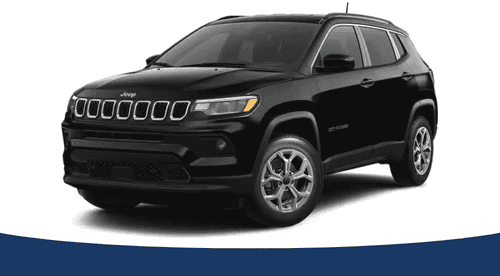
The short answer is that the 2026 Jeep Compass is the better choice if you want standard 4WD, more horsepower, much more torque, a traditional 8-speed automatic transmission, more cargo room, more ground clearance, and a Trailhawk trim with Jeep Active Drive Low 4WD, while the 2027 Honda HR-V is the better choice if you want a lower listed starting price, better fuel economy, available Real Time AWD, Honda Sensing, and a more affordable entry point.
The 2026 Jeep Compass is a five-passenger compact crossover SUV offered in Latitude, Latitude Altitude, Limited, Trailhawk, and Limited Altitude trims, and the 2027 Honda HR-V is a five-passenger subcompact crossover SUV offered in LX, Sport, and EX-L trims.
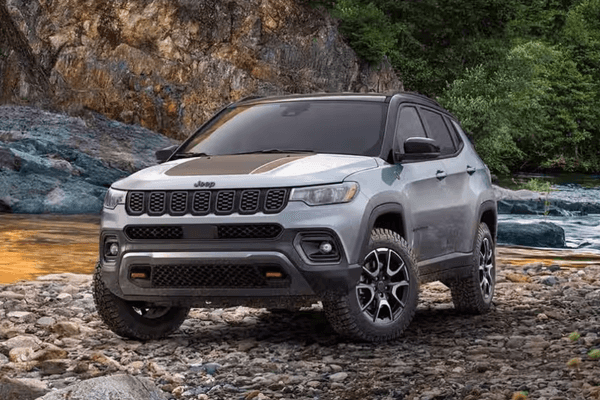
Every Compass uses a 2.0L I-4 Direct-Injection Turbo engine — a turbocharged engine that uses forced air to help an engine make more power from a smaller displacement — paired with an 8-speed automatic transmission and standard 4WD; most trims use Jeep Active Drive 4WD, while Trailhawk adds Jeep Active Drive Low 4WD. Every HR-V uses a 2.0-liter inline-4 engine and a CVT — a continuously variable transmission — with front-wheel drive standard, meaning power goes to the front wheels only; Real Time AWD with Intelligent Control System is available, and AWD can send power to more than one axle for better traction in rain, snow, and low-grip conditions, while 4WD sends power to all four wheels and is typically used for more rugged, traction-focused SUV setups. Understanding these drivetrain and powertrain terms is the foundation for evaluating which of these two small SUVs is the right fit for your northern New Jersey driving needs.
For a practical real-world comparison of the Jeep Compass vs. Honda HR-V, we recommend comparing the 2026 Jeep Compass Latitude 4WD against the 2027 Honda HR-V Sport AWD. These trims make sense for northern New Jersey SUV shoppers because both are five-passenger small SUVs with winter-ready traction, useful everyday technology, strong safety content, and enough practicality for commuting, errands, weekend gear, and family use. The Compass Latitude represents Jeep’s standard 4WD and turbocharged value story, while the HR-V Sport AWD represents Honda’s most relevant mix of cold-weather comfort, AWD availability, and everyday features — making this pairing the most useful starting point for buyers deciding between these two vehicles.
| Category | 2026 Jeep Compass Latitude 4WD | 2027 Honda HR-V Sport AWD | Winner |
|---|---|---|---|
| Segment | Compact crossover SUV | Subcompact crossover SUV | Depends on size preference |
| Listed starting price | $31,545 | $28,400 for Sport FWD; AWD available | HR-V |
| Seating | 5 passengers | 5 passengers | Tie |
| Drivetrain | 4WD standard | FWD standard, AWD available | Compass for standard traction |
| Standard engine | 2.0L turbocharged inline-4 | 2.0L inline-4 | Compass |
| Horsepower | 200 hp | 158 hp | Compass |
| Torque | 221 lb-ft | 138 lb-ft | Compass |
| Transmission | 8-speed automatic | CVT | Compass for traditional shifting; HR-V for smoothness |
| Fuel economy | 23 / 31 / 26 mpg | AWD: 25 / 30 / 27 mpg | HR-V |
| Ground clearance | 8.1 in | 7.3 in on Sport | Compass |
| Cargo behind second row | 27.2 cu ft | 24.4 cu ft | Compass |
| Maximum cargo volume | 59.8 cu ft | 55.1 cu ft | Compass |
| Rear legroom | 38.3 in | 37.7 in | Compass |
| Center display | Uconnect system; 10.1-inch touchscreen on Latitude Altitude and higher trims | 9-inch color touchscreen | HR-V Sport vs. Compass Latitude; Compass on higher trims |
| Driver-assistance suite | Active Lane Management, Full-Speed Forward Collision Warning, Blind Spot Monitoring, Rear Cross-Path Detection, Pedestrian/Cyclist Detection, Drowsy-Driver Detection, and more | Honda Sensing, Blind Spot Information, Rear Cross Traffic Monitor, Traffic Jam Assist, and more | Tie |
| Winter comfort | Heated front seats and heated steering wheel | Heated front seats, heated side mirrors, and remote engine start | Depends on priority |
| Best for | Power, 4WD, cargo, ground clearance | Price, fuel economy, Honda tech, city-friendly driving | Use-case split |
The table above shows the Compass winning on powertrain, traction, cargo, and ground clearance, while the HR-V wins on price and fuel economy — but several dimensions deserve closer interpretation for northern New Jersey buyers making a final decision.
On segment classification, the Compass is a compact crossover and the HR-V is a subcompact crossover, and that difference is real for buyers who care about footprint. Shoppers who prioritize the Compass’s larger cargo volume and greater ground clearance will find the compact designation meaningful; shoppers who prefer the HR-V’s city-friendly dimensions and longer wheelbase optimized for passenger comfort will find the subcompact format an advantage in dense northern New Jersey neighborhoods and parking structures.
On center display, the HR-V Sport holds the screen advantage in this specific trim matchup. The HR-V Sport includes a standard 9-inch touchscreen, while the Compass Latitude’s Uconnect system steps up to the larger 10.1-inch display only on Latitude Altitude and higher trims. Buyers committed to the Compass Latitude trim should factor in this distinction; buyers willing to move up to Compass Latitude Altitude or higher will gain the larger screen.
On driver-assistance technology, the Tie verdict in the table is a genuine one. The Compass delivers Active Lane Management, Full-Speed Forward Collision Warning with Active Braking, Blind Spot Monitoring, Rear Cross-Path Detection, Pedestrian and Cyclist Detection, and Drowsy-Driver Detection. The HR-V delivers Honda Sensing with Traffic Jam Assist, Adaptive Cruise Control with Low-Speed Follow, Lane Keeping Assist, and Blind Spot Information on Sport and EX-L trims. For northern New Jersey safety priorities — crowded parking lots, school pickup lanes, multi-lane highway traffic — both vehicles address the core needs well, and neither holds a meaningful edge over the other in this dimension.
On winter comfort, the choice is priority-dependent rather than a clear winner. The Compass Latitude offers heated front seats and a heated steering wheel, which many drivers in Morris, Sussex, and Warren County winters consider essential for immediate warmth during cold mornings. The HR-V Sport offers heated front seats, heated side mirrors for improved visibility in snow and ice, and remote engine start for pre-warming the cabin before entry. Whether steering wheel warmth or remote start convenience matters more is a personal call, and buyers should weigh both packages against their own cold-weather routines.
The Best for row in the table summarizes use-case positioning rather than measuring a single comparable dimension. In buyer terms: choose the Compass if your priorities are power, standard 4WD, cargo room, and ground clearance. Choose the HR-V if your priorities are lower listed pricing, better fuel economy, Honda technology, and city-friendly everyday driving.
The Jeep Compass has more horsepower and torque. Its 2.0L turbocharged engine makes 200 horsepower and 221 lb-ft of torque. The Honda HR-V’s 2.0-liter engine makes 158 horsepower and 138 lb-ft of torque.
The Honda HR-V gets better gas mileage. It is listed at 26 city / 32 highway / 28 combined mpg with FWD and 25 city / 30 highway / 27 combined mpg with AWD. The Jeep Compass is listed at 23 city / 31 highway / 26 combined mpg.
The Jeep Compass has more cargo space. It offers 27.2 cubic feet behind the second row and 59.8 cubic feet with the second row folded. The Honda HR-V offers 24.4 cubic feet behind the second row and 55.1 cubic feet maximum.
Passenger room is close. The Compass has slightly more rear legroom, at 38.3 inches compared with 37.7 inches in the HR-V. The HR-V has slightly more front legroom, at 41.9 inches compared with 41.8 inches in the Compass.
The Jeep Compass is better for winter-driving confidence because 4WD is standard across the lineup and it has more ground clearance. The Honda HR-V AWD is still a strong winter choice because it offers Real Time AWD with Intelligent Control System and includes Snow mode.
Every 2026 Jeep Compass trim includes standard 4WD. Most trims use Jeep Active Drive 4WD, while the Trailhawk uses Jeep Active Drive Low 4WD.
The 2027 Honda HR-V offers Real Time AWD with Intelligent Control System. Front-wheel drive is standard, and AWD is available across the lineup.
The Honda HR-V has the stronger standard technology story because every trim includes a 9-inch touchscreen, wireless Apple CarPlay, wireless Android Auto, Qi wireless phone charging, and a 7-inch TFT driver display. The Jeep Compass offers a larger 10.1-inch touchscreen on Latitude Altitude and higher trims, along with Uconnect, Apple CarPlay support, Android Auto compatibility, and a Jeep Connect services trial.
Both SUVs have strong safety technology. The Compass lists Active Lane Management, Full-Speed Forward Collision Warning with Active Braking, Blind Spot Monitoring, Rear Cross-Path Detection, Pedestrian/Cyclist Detection, Drowsy-Driver Detection, and ParkView Rear Back-Up Camera. The HR-V includes Honda Sensing, Traffic Jam Assist, Adaptive Cruise Control with Low-Speed Follow, Lane Keeping Assist, and other driver-assist features, with Blind Spot Information and Rear Cross Traffic Monitor standard on Sport and EX-L trims.
This comparison is written specifically for northern New Jersey SUV shoppers who need a small SUV that handles winter weather, daily commuting, family errands, and weekend use across the region’s varied road conditions. Drivers in Morris, Sussex, Warren, Passaic, and northern Bergen County face steep driveways, slushy side streets, hilly neighborhoods, and poorly plowed back roads where traction, ground clearance, and all-weather confidence are genuine priorities, while drivers in denser areas such as Bergen, Essex, Hudson, and Union County spend more time on Route 17, Route 46, Route 3, I-80, I-287, the Garden State Parkway, and the New Jersey Turnpike, where fuel economy, stop-and-go efficiency, parking, and everyday comfort matter most. Whether your northern New Jersey life calls for the rugged capability of the Jeep Compass or the commuter-friendly practicality of the Honda HR-V, this head-to-head comparison covers the dimensions that matter most for real buyers in this region.

This Jeep Compass vs. Honda HR-V comparison is built on vehicle data from manufacturer and trusted third-party sources to ensure accuracy for northern New Jersey shoppers. All listed prices, fuel economy figures, horsepower and torque ratings, cargo volumes, ground clearance measurements, legroom dimensions, and feature availability reflect published data at the time of writing. Buyers should verify current pricing, trim availability, and feature content with their dealer, as specifications and incentives can change, and this comparison is intended as a research starting point rather than a substitute for a hands-on test drive.
The Compass is better for families who want more cargo room, more rear legroom, standard 4WD, and stronger power. The HR-V is better for families who prioritize lower pricing, better fuel economy, Honda Sensing technology, and everyday commuting comfort.
The Jeep Compass is shorter, at 173.4 inches long, compared with 179.8 inches for the Honda HR-V. The HR-V is slightly narrower, at 72.4 inches wide, compared with 73.8 inches without mirrors for the Compass. For tight city parking, both are manageable, but the Compass has the shorter overall length and the HR-V has the narrower body.
The Compass Latitude 4WD is better for power, torque, standard 4WD, cargo room, ground clearance, rear legroom, and heated steering wheel availability. The HR-V Sport AWD is better for fuel economy, lower listed trim pricing before adding AWD, standard 9-inch touchscreen, 7-inch driver display, wireless phone charging, heated side mirrors, and Honda Sensing technology.
The 2026 Jeep Compass wins this comparison on standard 4WD, horsepower, torque, cargo space, ground clearance, traditional automatic transmission feel, and rugged Trailhawk capability. The 2027 Honda HR-V wins on lower listed pricing, fuel economy, standard Honda Sensing technology, available AWD, Snow mode, wireless phone charging, and city-friendly everyday driving. For northern New Jersey shoppers who want the more capable, stronger, winter-ready small SUV with standard traction built in, the Compass is the better fit; for shoppers who want the more affordable and fuel-efficient small SUV for commuting and daily use, the HR-V is the smarter practical choice. To experience the difference for yourself, visit Pine Belt Cars to schedule a test drive of the Compass, the HR-V, or both — getting behind the wheel of each is the most reliable way to confirm which small SUV matches your northern New Jersey driving life.
The Jeep Compass is better overall for shoppers who want standard 4WD, more horsepower, more torque, more cargo room, ground clearance, and rugged Jeep character. The Honda HR-V is better overall for shoppers who want lower listed pricing, better fuel economy, available AWD, Honda Sensing, and a more city-friendly daily-driver feel.
The Honda HR-V has the lower listed starting price. The 2027 HR-V LX starts at $26,600, while the 2026 Jeep Compass Latitude starts at $31,545. The Compass costs more to start, but it includes standard 4WD and a stronger turbocharged engine.
The Compass Latitude 4WD is better for power, torque, standard 4WD, cargo room, ground clearance, rear legroom, and heated steering wheel availability. The HR-V Sport AWD is better for fuel economy, lower listed trim pricing before adding AWD, standard 9-inch touchscreen, 7-inch driver display, wireless phone charging, heated side mirrors, and Honda Sensing technology.
The Jeep Compass has more horsepower and torque. Its 2.0L turbocharged engine makes 200 horsepower and 221 lb-ft of torque. The Honda HR-V’s 2.0-liter engine makes 158 horsepower and 138 lb-ft of torque.
The Honda HR-V gets better gas mileage. It is listed at 26 city / 32 highway / 28 combined mpg with FWD and 25 city / 30 highway / 27 combined mpg with AWD. The Jeep Compass is listed at 23 city / 31 highway / 26 combined mpg.
The Jeep Compass is better for winter-driving confidence because 4WD is standard across the lineup and it has more ground clearance. The Honda HR-V AWD is still a strong winter choice because it offers Real Time AWD with Intelligent Control System and includes Snow mode.
Yes. Every 2026 Jeep Compass trim includes standard 4WD. Most trims use Jeep Active Drive 4WD, while the Trailhawk uses Jeep Active Drive Low 4WD.
Yes. The 2027 Honda HR-V offers Real Time AWD with Intelligent Control System. Front-wheel drive is standard, and AWD is available across the lineup.
The Jeep Compass has more cargo space. It offers 27.2 cubic feet behind the second row and 59.8 cubic feet with the second row folded. The Honda HR-V offers 24.4 cubic feet behind the second row and 55.1 cubic feet maximum.
Passenger room is close. The Compass has slightly more rear legroom, at 38.3 inches compared with 37.7 inches in the HR-V. The HR-V has slightly more front legroom, at 41.9 inches compared with 41.8 inches in the Compass.
The Honda HR-V has the stronger standard technology story because every trim includes a 9-inch touchscreen, wireless Apple CarPlay, wireless Android Auto, Qi wireless phone charging, and a 7-inch TFT driver display. The Jeep Compass offers a larger 10.1-inch touchscreen on Latitude Altitude and higher trims, along with Uconnect, Apple CarPlay support, Android Auto compatibility, and a Jeep Connect services trial.
Both SUVs have strong safety technology. The Compass lists Active Lane Management, Full-Speed Forward Collision Warning with Active Braking, Blind Spot Monitoring, Rear Cross-Path Detection, Pedestrian/Cyclist Detection, Drowsy-Driver Detection, and ParkView Rear Back-Up Camera. The HR-V includes Honda Sensing, Traffic Jam Assist, Adaptive Cruise Control with Low-Speed Follow, Lane Keeping Assist, and other driver-assist features, with Blind Spot Information and Rear Cross Traffic Monitor standard on Sport and EX-L trims.
The Jeep Compass Trailhawk is better for off-road driving. It includes Jeep Active Drive Low 4WD, Hill Descent Control, a 20:1 crawl ratio, Rock Mode, Trail Rated capability, Falken WILDPEAK all-terrain tires, a full-size spare tire, and 8.6 inches of ground clearance. The HR-V is better suited to commuting, winter traction, and light outdoor use when equipped with AWD.
The Jeep Compass is shorter, at 173.4 inches long, compared with 179.8 inches for the Honda HR-V. The HR-V is slightly narrower, at 72.4 inches wide, compared with 73.8 inches without mirrors for the Compass. For tight city parking, both are manageable, but the Compass has the shorter overall length and the HR-V has the narrower body.
The Compass is better for families who want more cargo room, more rear legroom, standard 4WD, and stronger power. The HR-V is better for families who prioritize lower pricing, better fuel economy, Honda Sensing technology, and everyday commuting comfort.
Choose the Compass Trailhawk if you want the most capable version of the Compass, with Jeep Active Drive Low 4WD, Trail Rated capability, all-terrain tires, Hill Descent Control, and more ground clearance. Choose the HR-V EX-L if you want the most premium HR-V, with leather-trimmed seats, dual-zone climate control, moonroof, parking sensors, Low-Speed Braking Control, and an 8-speaker audio system. These two trims represent opposite ends of the capability-versus-comfort spectrum, and the right choice depends entirely on how you use your small SUV.


