The 2026 Chevrolet Trax and 2027 Honda HR-V are both five-passenger subcompact crossover SUVs designed for daily driving, commuting, errands, and city-friendly practicality. For shoppers in northern New Jersey, the choice comes down to two different strengths: the Trax delivers more standard value, strong everyday torque, and excellent cargo flexibility, while the HR-V offers more horsepower, available all-wheel drive, and Honda’s long-running reputation for refinement and reliability.
The short answer: the 2027 Honda HR-V is the better choice if you want available AWD, more horsepower, and a more refined suspension setup, while the 2026 Chevrolet Trax is the better choice if you want stronger fuel economy, more cargo room, more torque, and a larger available infotainment screen.
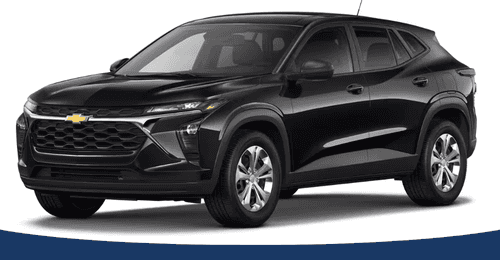
The 2026 Chevrolet Trax is a five-passenger subcompact crossover SUV offered in LS, 1RS, LT, 2RS, and ACTIV trims. Every Trax uses an ECOTEC 1.2L Turbo 3-cylinder engine with 137 horsepower and 162 lb-ft of torque, paired with a 6-speed automatic transmission and front-wheel drive.
The 2027 Honda HR-V is a five-passenger subcompact crossover SUV offered in LX, Sport, and EX-L trims. Every HR-V uses a 2.0-liter inline-4 engine with 158 horsepower and 138 lb-ft of torque, paired with a continuously variable transmission (CVT). Front-wheel drive is standard, and Real Time AWD with Intelligent Control System is available.
A turbocharged engine uses forced air to help a smaller engine make more usable power. Front-wheel drive (FWD) sends power to the front wheels. All-wheel drive (AWD) can send power to all four wheels for added traction in rain, snow, and slippery conditions. A CVT, or continuously variable transmission, changes ratios smoothly instead of shifting through fixed gears.

The Chevrolet Trax gives shoppers more trim personalities to choose from: LS, 1RS, LT, 2RS, and ACTIV. The LS is the entry point, the 1RS and 2RS add sportier styling, the LT adds more everyday tech, and the ACTIV adds a more rugged design theme
The Honda HR-V keeps the lineup simpler with LX, Sport, and EX-L trims. The LX covers the essentials, the Sport adds a more athletic look and useful driver-assist upgrades, and the EX-L adds more premium comfort and technology features
If you want more style and value variations, choose the Chevrolet Trax.
If you want a simpler three-trim lineup, choose the Honda HR-V.
For a practical real-world comparison, we recommend comparing the 2026 Chevrolet Trax LT against the 2027 Honda HR-V Sport.
These trims are strong middle-ground choices. The Trax LT adds the larger 11-inch touchscreen, 8-inch Driver Information Center, 6-speaker audio system, remote start, automatic climate controls, and upgraded seating materials. The HR-V Sport adds gloss black alloy wheels, heated front seats, remote engine start, blind spot information, rear cross traffic monitor, and other useful upgrades over the LX.
| Category | 2026 Chevrolet Trax LT | 2027 Honda HR-V Sport | Winner |
|---|---|---|---|
| Segment | Subcompact crossover SUV | Subcompact crossover SUV | Tie |
| Seating | 5 passengers | 5 passengers | Tie |
| Engine | ECOTEC 1.2L Turbo 3-cylinder | 2.0L inline-4 | Depends on preference |
| Horsepower | 137 hp | 158 hp | HR-V |
| Torque | 162 lb-ft | 138 lb-ft | Trax |
| Transmission | 6-speed automatic | CVT | Trax for traditional shifting; HR-V for smoothness |
| Drivetrain | FWD only | FWD standard, AWD available | HR-V |
| Fuel Economy | 28 city / 32 highway / 30 combined mpg on gasoline | 26 city / 32 highway / 28 combined mpg 2WD; 25 / 30 / 27 AWD | Trax |
| Cargo Volume | 25.6 cu ft behind rear seats / 54.1 cu ft max | 24.4 cu ft standard / 55.1 cu ft max | Trax for rear-seat-up utility; HR-V for max folded cargo |
| Passenger Volume | 100 cu ft | 98.7 cu ft | Trax by listed LT volume |
| Ground Clearance | 7.3 in | 7.3 in (Sport; LX/EX-L 7.0 in) | Tie |
| Rear Legroom | 38.7 in | 37.7 in | Trax |
| Winter Comfort | Remote start and automatic climate controls | Heated front seats, remote engine start, heated side mirrors | HR-V |
| Infotainment | 11-inch touchscreen | 9-inch touchscreen | Trax |
| Driver Display | 8-inch Driver Information Center | 7-inch TFT meter | Trax |
| Safety Suite | Chevy Safety Assist | Honda Sensing | Tie |
| Best For | Value, screen size, torque, efficiency | AWD availability, horsepower, winter traction | Split by use case |

The Honda HR-V has more horsepower. The 2027 HR-V makes 158 horsepower, while the 2026 Trax makes 137 horsepower.
The Chevrolet Trax has more torque. The Trax produces 162 lb-ft of torque, while the HR-V produces 138 lb-ft. Torque helps with low-speed response, especially in city driving and stop-and-go traffic.
The Trax also uses a turbocharged 3-cylinder engine and a 6-speed automatic transmission. The HR-V uses a naturally aspirated inline-4 and a CVT.
If you want more horsepower, choose the Honda HR-V.
If you want more torque and a traditional automatic transmission, choose the Chevrolet Trax.
The Chevrolet Trax has the fuel economy advantage on regular gasoline. The Trax is rated at 28 city / 32 highway / 30 combined mpg on regular gasoline. The Honda HR-V is rated at 26 city / 32 highway / 28 combined mpg with 2WD and 25 city / 30 highway / 27 combined mpg with AWD.
For northern New Jersey drivers who spend time in traffic on Route 9, Route 18, Route 35, the Parkway, or the Turnpike, the Trax’s higher combined mpg can be a meaningful advantage over time.
The Trax is also E85 compatible, but its E85 fuel economy is lower at 21 city / 24 highway / 22 combined mpg.
If fuel economy is your top priority, choose the Chevrolet Trax.
The Honda HR-V has the clear winter-driving advantage because it offers Real Time AWD with Intelligent Control System. The Chevrolet Trax is front-wheel drive only.
Both SUVs can handle normal commuting, but AWD can be helpful on snowy mornings, steep driveways, wet leaves, and poorly plowed roads. AWD does not replace winter tires, but it can improve traction when accelerating on slippery surfaces.
The HR-V also includes Dynamic Drive Modes: Econ, Normal, and Snow. Snow mode gives the HR-V an additional advantage for shoppers who want a small SUV prepared for winter conditions.
If AWD is important, choose the Honda HR-V.
If you are comfortable with FWD and want better fuel economy, choose the Chevrolet Trax.
The Trax and HR-V are very close on cargo space, but each has a slightly different advantage.
The Chevrolet Trax offers 25.6 cubic feet behind the rear seats and 54.1 cubic feet maximum. The Honda HR-V offers 24.4 cubic feet standard and 55.1 cubic feet maximum.
That means the Trax gives you slightly more space with the rear seats up, while the HR-V gives you a slight maximum-cargo advantage with the rear seats folded. For northern New Jersey drivers using a small SUV for grocery runs, train-station parking, daycare drop-offs, or Shore-weekend bags, the Trax’s rear-seat-up advantage may be the more useful measurement when passengers are still riding in back.
Passenger space is also close. The Trax lists 100 cubic feet of passenger volume, while the HR-V Sport lists 98.7 cubic feet.
The Trax has a small rear-seat legroom advantage, with 38.7 inches of rear legroom compared with 37.7 inches in the HR-V. That matters for families, carpooling, rideshare use, or adults sitting in the second row.
If you want more cargo space with the rear seats in use, choose the Chevrolet Trax.
If you want slightly more maximum cargo room with the seats folded, choose the Honda HR-V.
If rear-seat legroom is more important, choose the Chevrolet Trax.
The Chevrolet Trax has the screen-size advantage in the recommended trim comparison. The Trax LT includes an 11-inch diagonal HD color touchscreen and an 8-inch diagonal color Driver Information Center.
The Honda HR-V Sport includes a 9-inch color touchscreen and a 7-inch TFT meter.
Both SUVs include wireless Apple CarPlay and wireless Android Auto compatibility. The HR-V also lists a Qi wireless phone charger as standard, while the Trax lists built-in Wi-Fi hotspot capability. For daily northern New Jersey commuting, that gives the Trax an advantage for map and camera visibility, while the HR-V has the stronger convenience-feature mix.
The Trax LS starts with an 8-inch touchscreen, while the Trax LT, 2RS, and ACTIV step up to an 11-inch touchscreen. The HR-V uses a 9-inch color touchscreen across the trims listed here. For audio, the Trax LT and higher trims list a 6-speaker audio system, while the HR-V Sport lists a 6-speaker system and the HR-V EX-L lists an 8-speaker system.
Comfort features matter in northern New Jersey winters. The Trax LT includes remote start and automatic climate controls. The HR-V Sport includes heated front seats, remote engine start, heated side mirrors, and a leather-wrapped steering wheel.
If you want the larger touchscreen and driver display, choose the Chevrolet Trax LT.
If you want standard wireless phone charging and more cold-weather comfort features on the recommended trim, choose the Honda HR-V.
Both SUVs include strong driver-assist technology.
The Chevrolet Trax includes Chevy Safety Assist. Standard safety features include Forward Collision Alert, Automatic Emergency Braking, Front Pedestrian Braking, Lane Keep Assist with Lane Departure Warning, Following Distance Indicator, IntelliBeam High Beam Assist, Rear Vision Camera, Rear Seat Reminder, and Teen Driver Technology.
The Honda HR-V includes Honda Sensing. Honda Sensing features include Collision Mitigation Braking System, Road Departure Mitigation System, Lane Departure Warning, Forward Collision Warning, Adaptive Cruise Control with Low-Speed Follow, Lane Keeping Assist, Traffic Sign Recognition, Traffic Jam Assist, Driver Attention Monitor, Auto High-Beam Headlights, Post-Collision Braking, Vehicle Stability Assist with Traction Control, ABS, Brake Assist, Electronic Brake Distribution, and a rearview camera with dynamic guidelines.
The HR-V Sport adds Blind Spot Information System and Rear Cross Traffic Monitor as standard. On the Trax, Rear Park Assist, Adaptive Cruise Control, Rear Cross Traffic Alert, and Lane Change Alert with Side Blind Zone Alert are available but not listed as standard.
That difference matters because blind spot and rear cross traffic features are especially useful in dense parking lots, multi-lane traffic, and tight urban driving around northern New Jersey.
If standard driver-assist depth is your priority, both SUVs are strong.
If you want blind spot and rear cross traffic features standard on the recommended trim, choose the Honda HR-V Sport.
The Trax uses a MacPherson strut front suspension and a semi-independent torsion beam rear suspension. The HR-V uses a MacPherson strut front suspension and a multi-link rear suspension.
A multi-link rear suspension can help improve ride comfort and handling refinement, especially on rough pavement. That can matter on northern New Jersey roads where potholes, expansion joints, and uneven surfaces are common.
The Trax counters with a lighter, city-friendly feel and useful turbo torque for everyday driving.
If ride refinement matters more, choose the Honda HR-V.
If city-friendly simplicity and torque matter more, choose the Chevrolet Trax.

Honda has a strong reputation for long-term reliability and resale value, which may make the HR-V appealing to shoppers who plan to keep their SUV for many years.
Chevrolet offers broad dealer support, a familiar ownership experience, and a strong value position in the subcompact SUV segment. The Trax also lists a 3-year / 36,000-mile bumper-to-bumper warranty and a 5-year / 60,000-mile powertrain warranty.
The HR-V includes a Honda Maintenance Program for 1 year / 12,000 miles. Rather than treating that as a direct warranty comparison, it is best understood as a separate ownership benefit.
If long-term reliability reputation is your priority, the Honda HR-V has the advantage.
If value, Chevrolet dealer familiarity, and clearly listed warranty coverage matter more, the Chevrolet Trax is very competitive.
For most shoppers, the choice comes down to priorities: HR-V for the AWD and winter-confidence buyer; Trax for the efficiency, value, and everyday-practicality buyer.
Choose the HR-V if winter traction, Snow mode, standard Sport-trim blind spot features, and ride refinement matter most.
Choose the Trax if AWD is not a must-have and you want stronger fuel economy, more torque, a larger available touchscreen, and strong cargo space with the rear seats in use.
For northern New Jersey shoppers, the first question is simple: do you need AWD for your commute and parking conditions? If yes, start with the HR-V; if no, the Trax is the stronger value/practicality play.
For northern New Jersey shoppers, the decision should start with the AWD fork. The HR-V is the stronger pick for drivers who regularly deal with snowy mornings, steep driveways, poorly plowed side streets, or traction concerns.
The Trax is the stronger local fit if your driving is mostly commuting, errands, parking-lot maneuvering, and highway use where fuel economy, torque, screen size, and cargo practicality matter more than AWD.
The 2027 Honda HR-V is the better choice for shoppers who want available AWD, more horsepower, Snow mode, and a more refined suspension setup.
The 2026 Chevrolet Trax is the better choice for shoppers who do not need AWD and want stronger fuel economy, more torque, a larger available touchscreen, and strong everyday cargo practicality.
The Honda HR-V is better overall for most northern New Jersey shoppers who want AWD, but the Chevrolet Trax is the stronger choice if fuel economy and everyday practicality matter more than traction.
The Honda HR-V offers available Real Time AWD with Intelligent Control System. The Chevrolet Trax is front-wheel drive only.
The Honda HR-V has more horsepower. It makes 158 hp, while the Chevrolet Trax makes 137 hp.
The Chevrolet Trax has more torque. It produces 162 lb-ft, compared with 138 lb-ft in the Honda HR-V.
The Trax has slightly more cargo room behind the rear seats, with 25.6 cubic feet compared with 24.4 cubic feet in the HR-V. The HR-V has slightly more maximum cargo room, with 55.1 cubic feet compared with 54.1 cubic feet in the Trax.
The Chevrolet Trax has slightly more rear legroom, with 38.7 inches compared with 37.7 inches in the Honda HR-V.
The Honda HR-V is better in snow because it offers available AWD and includes Snow mode. The Chevrolet Trax is front-wheel drive only.
The Chevrolet Trax LT has the larger touchscreen and driver display in the recommended trim comparison. The Honda HR-V Sport has standard wireless phone charging and standard blind spot and rear cross traffic features.
The Honda HR-V Sport has the advantage for winter comfort because it includes heated front seats, heated side mirrors, and remote engine start. The Chevrolet Trax LT includes remote start and automatic climate controls.
Choose the Honda HR-V if you want available AWD for winter traction. Choose the Chevrolet Trax if you want better fuel economy, more torque, and a larger available touchscreen in a front-wheel-drive SUV.


