This is a head-to-head comparison of two competing full-size pickups for the 2026 model year: the Chevrolet Silverado 1500 and the Ford F-150. The 2026 Chevrolet Silverado 1500 and the 2026 Ford F-150 are full-size light-duty pickup trucks designed for work, towing, hauling, commuting, job sites, home projects, and weekend use across northern New Jersey. For pickup shoppers evaluating the silverado vs f-150 decision in northern New Jersey, the right choice depends on how the truck will be used: daily driving, contracting, towing, winter traction, outdoor recreation, or premium comfort. The 2026 Silverado 1500 versus the 2026 Ford F-150 comparison isolates the differences that matter most to northern New Jersey truck buyers choosing between these two best pickup truck contenders.
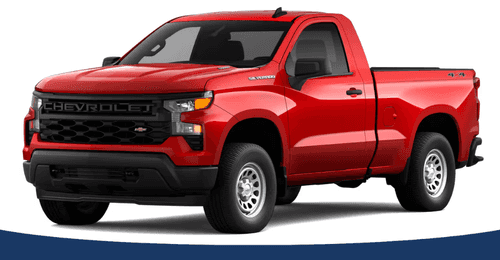
For most northern New Jersey truck buyers seeking the best pickup truck for their needs, the Silverado 1500 offers the best balance of capability, value, and everyday usability; the F-150 is the better choice only if you need maximum towing, hybrid power, or Raptor performance. The 2026 Ford F-150 wins on maximum towing (up to 13,500 pounds available), maximum payload (up to 2,440 pounds available), engine variety (six powertrain choices including the 3.5L PowerBoost Full Hybrid V6), hybrid availability with 4WD hybrid fuel economy listed at 22 city / 24 highway / 23 combined mpg, trailer-assist technology including available Pro Trailer Hitch Assist and Pro Trailer Backup Assist, onboard power availability with available Pro Power Onboard on King Ranch, and Raptor performance with 450 horsepower from the 3.5L High Output EcoBoost V6 or 720 horsepower from the Raptor R’s 5.2L Supercharged V8. The 2026 Chevrolet Silverado 1500 is the stronger fit for many northern New Jersey truck shoppers who want a lower listed starting price ($47,900 for LT versus $48,490 for XLT, and $36,900 for WT versus $40,085 for XL), more standard torque in the LT vs. XLT comparison (430 lb-ft versus 400 lb-ft), available Duramax 3.0L Turbo-Diesel I6 power with the ZR2 listing the Duramax diesel as standard, a larger available center touchscreen (13.4-inch diagonal on LT and higher trims versus 12-inch on F-150), standard Chevy Safety Assist including Forward Collision Alert, Automatic Emergency Braking, Front Pedestrian Braking, Lane Keep Assist with Lane Departure Warning, Following Distance Indicator, and IntelliBeam Auto High Beams, and Chevrolet off-road choices like Custom Trail Boss, LT Trail Boss, and ZR2 with front and rear electronic locking differentials and Multimatic DSSV dampers on ZR2. For buyers who need the highest possible towing and payload numbers or a hybrid truck, the F-150 has the edge; for buyers who want a capable, torque-rich, value-conscious full-size pickup with strong technology and diesel availability, the Silverado 1500 is an excellent choice.
The 2026 Chevrolet Silverado 1500 is a full-size light-duty pickup truck offered in WT, Custom, Custom Trail Boss, LT, RST, LT Trail Boss, LTZ, High Country, and ZR2 trims, with Regular Cab, Double Cab, and Crew Cab configurations, seating for 3 to 6 passengers depending on configuration, and gasoline or diesel engine choices. The 2026 Ford F-150 is a full-size light-duty pickup truck offered in XL, STX, XLT, Lariat, Tremor, King Ranch, Platinum, and Raptor trims, with Regular Cab, SuperCab (an extended cab with rear-hinged doors), and SuperCrew (a full four-door crew cab) configurations depending on trim, seating for 3 to 6 passengers depending on configuration, and multiple gasoline, hybrid, and high-performance powertrain choices. A light-duty pickup is designed for everyday work, towing, hauling, commuting, and personal use rather than heavy-duty commercial towing; two-wheel drive (2WD) sends power to one axle, while four-wheel drive (4WD) can send power to all four wheels for better traction in snow, mud, gravel, and job-site conditions; payload refers to how much weight the truck can carry in the cabin and bed, while towing capacity refers to how much trailer weight the truck can pull when properly equipped; Crew Cab is Chevrolet’s term for a full four-door cab configuration, while SuperCrew is Ford’s equivalent full four-door cab designation; Duramax is Chevrolet’s 3.0L turbo-diesel inline-6 engine, while EcoBoost is Ford’s turbocharged gasoline engine family. These definitions establish the core terminology used throughout this comparison.
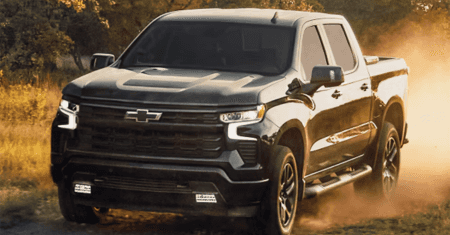
The 2026 Chevrolet Silverado 1500 is a full-size light-duty pickup truck offered in WT, Custom, Custom Trail Boss, LT, RST, LT Trail Boss, LTZ, High Country, and ZR2 trims, with Regular Cab, Double Cab, and Crew Cab configurations, seating for 3 to 6 passengers depending on configuration, and gasoline or diesel engine choices. The 2026 Ford F-150 is a full-size light-duty pickup truck offered in XL, STX, XLT, Lariat, Tremor, King Ranch, Platinum, and Raptor trims, with Regular Cab, SuperCab (an extended cab with rear-hinged doors), and SuperCrew (a full four-door crew cab) configurations depending on trim, seating for 3 to 6 passengers depending on configuration, and multiple gasoline, hybrid, and high-performance powertrain choices.
For a practical real-world comparison targeting northern New Jersey truck shoppers evaluating the Silverado vs F-150 decision, we recommend comparing the 2026 Chevrolet Silverado 1500 LT against the 2026 Ford F-150 XLT. These trims sit above the basic work-truck level while remaining practical for daily use, towing, home projects, and job-site needs, offering modern infotainment, useful capability, available 4WD, and access to important truck features without moving into luxury or specialty off-road pricing.
| Category | 2026 Chevrolet Silverado 1500 LT | 2026 Ford F-150 XLT | Winner |
|---|---|---|---|
| Segment | Full-size light-duty pickup | Full-size light-duty pickup | Tie |
| Listed starting price | $47,900 | $48,490 | Silverado |
| Seating | 3 to 6 depending on configuration | Up to 6 | Tie |
| Cab configurations | Regular Cab, Double Cab, Crew Cab in Silverado lineup | SuperCab and SuperCrew on XLT | Depends on configuration |
| Standard engine | TurboMax 2.7L turbocharged inline-4 | 2.7L EcoBoost V6 | Depends on preference |
| Horsepower | 310 hp | 325 hp | F-150 |
| Torque | 430 lb-ft | 400 lb-ft | Silverado |
| Transmission | 8-speed automatic | 10-speed automatic | Depends on preference |
| Drivetrain | 2WD standard, 4WD available | 2WD standard, 4WD available | Tie |
| Fuel economy, standard engine | 2WD: 18 / 21 / 20 mpg; 4WD: 17 / 21 / 19 mpg | 2WD: 19 / 25 / 21 mpg; 4WD: 18 / 23 / 20 mpg | F-150 |
| Max available towing | Up to 13,300 lbs | Up to 13,500 lbs | F-150 |
| Max available payload | Up to 2,260 lbs | Up to 2,440 lbs | F-150 |
| Center display | 13.4-inch diagonal touchscreen | 12-inch center display | Silverado |
| Driver display | 12.3-inch diagonal Driver Information Center | Available 12-inch productivity screen | Silverado for listed standard LT display |
| Driver-assistance suite | Chevy Safety Assist standard | Ford Co-Pilot360 technologies; availability varies | Silverado for clearly defined standard suite |
| Trailering and towing technology | Available Trailering App, Trailer Side Blind Zone Alert, and advanced camera views | Available Pro Trailer Hitch Assist and Pro Trailer Backup Assist | F-150 for trailer-assist automation; Silverado for available camera/blind-zone support |
| Best for | Torque, value, screen size, diesel availability | Max ratings, engine variety, trailer-assist tech | Depends on buyer priority |
The Silverado 1500 LT delivers 430 lb-ft of torque compared to the F-150 XLT’s 400 lb-ft, giving northern New Jersey truck shoppers a meaningful advantage for low-speed pull when carrying tools, moving landscaping materials, or getting a trailer moving from a stop. The F-150 XLT counters with 325 horsepower versus the Silverado’s 310 horsepower and better fuel economy at 19 city / 25 highway / 21 combined mpg with 2WD compared to the Silverado’s 18 city / 21 highway / 20 combined mpg with 2WD, which matters for drivers who use a pickup every day on Route 17, Route 46, I-80, I-287, Route 3, the Garden State Parkway, or the New Jersey Turnpike. Standard engine choice depends on buyer preference—the Silverado’s TurboMax inline-4 versus the F-150’s EcoBoost V6 represent different engineering philosophies (torque-forward versus horsepower-balanced) rather than a clear winner. Transmission choice depends on buyer preference—the Silverado’s 8-speed versus the F-150’s 10-speed represent different gearing strategies (fewer shifts with wider ratios versus more shifts with closer ratios) rather than a clear winner.
For maximum capability, the F-150 offers up to 13,500 pounds of available towing and up to 2,440 pounds of available payload when properly equipped, edging out the Silverado’s up to 13,300 pounds of available towing and up to 2,260 pounds of available payload—a difference that matters most for northern New Jersey buyers towing near the top of the light-duty class or regularly loading the truck close to its rated limit.
The F-150 XLT counters with 325 horsepower versus the Silverado’s 310 horsepower and better fuel economy at 19 city / 25 highway / 21 combined mpg with 2WD compared to the Silverado’s 18 city / 21 highway / 20 combined mpg with 2WD, which matters for drivers who use a pickup every day on Route 17, Route 46, I-80, I-287, Route 3, the Garden State Parkway, or the New Jersey Turnpike.
Cab configuration choice depends on buyer needs—the Silverado offers Regular, Double, and Crew Cab across the lineup while the F-150 XLT specifically offers SuperCab and SuperCrew, making the choice configuration-dependent rather than a clear winner for either truck. Both are full-size pickups, so configuration matters—a Crew Cab or SuperCrew with a shorter bed is easier to park and commute with in northern New Jersey’s tighter parking lots, downtown areas, and commuter lots than a longer-bed work configuration, while a longer bed is more useful for hauling materials, tools, and equipment; buyers should choose the cab and bed setup based on driveway space, parking needs, job-site access, and towing requirements.
Both trucks can be strong winter choices when equipped with 4WD—the Silverado is especially appealing in Custom Trail Boss, LT Trail Boss, and ZR2 form with 4WD, off-road suspension, locking differentials, and all-terrain tires, while the F-150 is especially appealing in Tremor and Raptor form with 4WD, increased ride height, Trail Control, and desert-capable off-road hardware. The Silverado ZR2 is Chevrolet’s strongest off-road option with 4WD, Multimatic DSSV dampers, front and rear electronic locking differentials, skid plates, 33-inch Goodyear Wrangler Territory MT tires, and a 33.5-degree approach angle; the F-150 Raptor is Ford’s strongest high-performance off-road option with 4WD, FOX shock technology, heavy-duty skid plates, available 37-inch all-terrain tires, Baja drive mode, and available Raptor R supercharged V8 power—the Silverado ZR2 wins on locking differentials while the Raptor wins on high-speed desert performance.
The Silverado LT includes a standard 12.3-inch Driver Information Center while the F-150 XLT lists a 12-inch productivity screen as available rather than standard, giving the Silverado the edge for standard driver display size. The Silverado has the larger available center touchscreen with a 13.4-inch diagonal display listed on LT and higher trims plus wireless Apple CarPlay and wireless Android Auto; the F-150 counters with a 12-inch center display, SYNC 4, available BlueCruise hands-free highway driving, available surround-view camera technology, Pro Trailer Hitch Assist, Pro Trailer Backup Assist, Mobile Office Package availability, and available Pro Power Onboard—the Silverado wins on screen size while the F-150 wins on trailer-assist automation and onboard power. For trailering technology, the F-150 wins on trailer-assist automation with available Pro Trailer Hitch Assist and Pro Trailer Backup Assist, while the Silverado offers strong camera and blind-zone support with available Trailering App, Trailer Side Blind Zone Alert, and advanced camera views.
The Silverado includes Chevy Safety Assist as a clearly defined standard suite while the F-150’s Ford Co-Pilot360 availability varies by trim, giving the Silverado the edge for standard safety clarity.
Both are full-size pickups, so configuration matters—a Crew Cab or SuperCrew with a shorter bed is easier to park and commute with in northern New Jersey’s tighter parking lots, downtown areas, and commuter lots than a longer-bed work configuration, while a longer bed is more useful for hauling materials, tools, and equipment; buyers should choose the cab and bed setup based on driveway space, parking needs, job-site access, and towing requirements.

Resale value depends on trim, mileage, condition, and regional demand; historically both the Silverado and F-150 hold strong resale value as full-size pickups, and northern New Jersey buyers should consult current market data at the time of purchase for the most accurate comparison. Both trucks have extensive dealer networks in northern New Jersey; Pine Belt Cars services Chevrolet vehicles locally, and Ford dealers are also widely available throughout Bergen County, Passaic County, and surrounding areas—buyers should confirm service convenience based on their home or work location.
To choose between the Silverado 1500 and the F-150, follow this decision workflow.
After completing these steps, you will have identified the truck configuration that best matches your needs.
The Silverado 1500 is best for northern New Jersey truck buyers who prioritize torque, value, screen size, and diesel availability; the F-150 is best for buyers who prioritize maximum ratings, engine variety, and trailer-assist technology. The Silverado 1500 LT or RST is a strong daily-and-weekend choice if you want torque, technology, available diesel power, and Chevrolet truck familiarity; the F-150 XLT is a strong choice if you want better standard-engine fuel economy, more engine options, and available trailer-assist technology—the choice depends on whether you prioritize torque or fuel economy. Contractors should compare the Silverado WT and LT against the F-150 XL and XLT—the Silverado has the lower listed entry price (WT starts at $36,900 versus F-150 XL at $40,085) and stronger standard torque (430 lb-ft in LT versus 400 lb-ft in XLT), while the F-150 has higher maximum towing and payload ratings, strong cab and bed flexibility, and available features that support towing and mobile work—the Silverado wins on value while the F-150 wins on maximum capability.
For most northern New Jersey truck buyers seeking the best pickup truck for their needs, the Silverado 1500 offers the best balance of capability, value, and everyday usability; the F-150 is the better choice only if you need maximum towing, hybrid power, or Raptor performance. Schedule a test drive at Pine Belt Cars to confirm your choice and experience how each truck handles northern New Jersey roads, job sites, and towing conditions.
The Ford F-150 wins on maximum towing (up to 13,500 pounds available), maximum payload (up to 2,440 pounds available), engine variety (six powertrain choices including hybrid), and Raptor performance; the Chevrolet Silverado 1500 wins on lower listed starting price ($47,900 for LT versus $48,490 for XLT), stronger standard torque (430 lb-ft versus 400 lb-ft), available Duramax diesel power, larger available center touchscreen (13.4 inches versus 12 inches), and standard Chevy Safety Assist.
The 2026 Ford F-150 can tow more based on maximum listed ratings, offering up to 13,500 pounds of available towing with the available 3.5L EcoBoost V6 when properly equipped, compared to the 2026 Chevrolet Silverado 1500’s up to 13,300 pounds of available towing when properly equipped—the F-150 wins on maximum towing while the Silverado remains highly competitive.
The Ford F-150 has the higher maximum available payload rating at up to 2,440 pounds with the available 3.5L EcoBoost V6 when properly equipped, compared to the Silverado 1500’s up to 2,260 pounds of available payload—the F-150 wins on payload while both exceed typical light-duty needs.
The Silverado 1500 LT has more standard torque at 430 lb-ft from its TurboMax 2.7L turbocharged engine, compared to the F-150 XLT’s 400 lb-ft from its standard 2.7L EcoBoost V6—the Silverado wins on torque while the F-150 wins on horsepower.
The F-150 XLT has more standard horsepower at 325 horsepower from its 2.7L EcoBoost V6, compared to the Silverado 1500 LT’s 310 horsepower from its TurboMax engine—the F-150 wins on horsepower while the Silverado wins on torque.
The F-150 XLT gets better listed fuel economy with its standard 2.7L EcoBoost V6 at 19 city / 25 highway / 21 combined mpg with 2WD and 18 city / 23 highway / 20 combined mpg with 4WD, compared to the Silverado LT’s TurboMax engine at 18 city / 21 highway / 20 combined mpg with 2WD and 17 city / 21 highway / 19 combined mpg with 4WD—the F-150 wins on fuel economy while the Silverado wins on torque.
Yes, the Silverado 1500 offers an available Duramax 3.0L Turbo-Diesel I6, and the ZR2 lists the Duramax diesel as its standard engine; the F-150 does not offer a diesel option in this comparison—the Silverado wins on diesel availability while the F-150 offers hybrid power instead.
Yes, the Ford F-150 offers an available 3.5L PowerBoost Full Hybrid V6 on select trims with 4WD hybrid fuel economy listed at 22 city / 24 highway / 23 combined mpg; the Silverado does not offer a hybrid option in this comparison—the F-150 wins on hybrid availability while the Silverado offers diesel power instead.
Both trucks can be strong winter choices when equipped with 4WD—the Silverado is especially appealing in Custom Trail Boss, LT Trail Boss, and ZR2 form with 4WD, off-road suspension, locking differentials, and all-terrain tires, while the F-150 is especially appealing in Tremor and Raptor form with 4WD, increased ride height, Trail Control, and desert-capable off-road hardware.
The Silverado ZR2 is Chevrolet’s strongest off-road option with 4WD, Multimatic DSSV dampers, front and rear electronic locking differentials, skid plates, 33-inch Goodyear Wrangler Territory MT tires, and a 33.5-degree approach angle; the F-150 Raptor is Ford’s strongest high-performance off-road option with 4WD, FOX shock technology, heavy-duty skid plates, available 37-inch all-terrain tires, Baja drive mode, and available Raptor R supercharged V8 power—the Silverado ZR2 wins on locking differentials while the Raptor wins on high-speed desert performance.
The Silverado has the larger available center touchscreen with a 13.4-inch diagonal display listed on LT and higher trims plus wireless Apple CarPlay and wireless Android Auto; the F-150 counters with a 12-inch center display, SYNC 4, available BlueCruise hands-free highway driving, available surround-view camera technology, Pro Trailer Hitch Assist, Pro Trailer Backup Assist, Mobile Office Package availability, and available Pro Power Onboard—the Silverado wins on screen size while the F-150 wins on trailer-assist automation and onboard power.
The F-150 is better if you want the highest available towing rating (up to 13,500 pounds) or Ford’s available trailer-assist systems including Pro Trailer Hitch Assist and Pro Trailer Backup Assist; the Silverado is a strong towing truck with up to 13,300 pounds of available towing and available trailering features such as Trailer Side Blind Zone Alert, HD Surround Vision, and advanced camera views depending on trim and configuration—the F-150 wins on maximum ratings and trailer-assist automation while the Silverado wins on camera and blind-zone support.
Contractors should compare the Silverado WT and LT against the F-150 XL and XLT—the Silverado has the lower listed entry price (WT starts at $36,900 versus F-150 XL at $40,085) and stronger standard torque (430 lb-ft in LT versus 400 lb-ft in XLT), while the F-150 has higher maximum towing and payload ratings, strong cab and bed flexibility, and available features that support towing and mobile work—the Silverado wins on value while the F-150 wins on maximum capability.
The Silverado 1500 LT or RST is a strong daily-and-weekend choice if you want torque, technology, available diesel power, and Chevrolet truck familiarity; the F-150 XLT is a strong choice if you want better standard-engine fuel economy, more engine options, and available trailer-assist technology—the choice depends on whether you prioritize torque or fuel economy.
Both are full-size pickups, so configuration matters—a Crew Cab or SuperCrew with a shorter bed is easier to park and commute with in northern New Jersey’s tighter parking lots, downtown areas, and commuter lots than a longer-bed work configuration, while a longer bed is more useful for hauling materials, tools, and equipment; buyers should choose the cab and bed setup based on driveway space, parking needs, job-site access, and towing requirements.
Resale value depends on trim, mileage, condition, and regional demand; historically both the Silverado and F-150 hold strong resale value as full-size pickups, and northern New Jersey buyers should consult current market data at the time of purchase for the most accurate comparison.
Both trucks have extensive dealer networks in northern New Jersey; Pine Belt Cars services Chevrolet vehicles locally, and Ford dealers are also widely available throughout Bergen County, Passaic County, and surrounding areas—buyers should confirm service convenience based on their home or work location.


