The 2026 Chevrolet Equinox and 2026 Toyota RAV4 are both five-passenger compact SUVs built for commuting, errands, family use, and weekend travel. For shoppers in northern New Jersey, the decision comes down to a clear tradeoff: the Equinox offers a traditional gas-powered SUV experience, while the RAV4 focuses on hybrid efficiency, stronger output, and more cargo space.
The short answer: the 2026 Toyota RAV4 is the stronger overall pick for fuel economy, cargo space, towing capability, and hybrid performance, while the 2026 Chevrolet Equinox is a strong choice for buyers who want a simpler gas-only SUV with familiar Chevrolet features and available all-wheel drive.
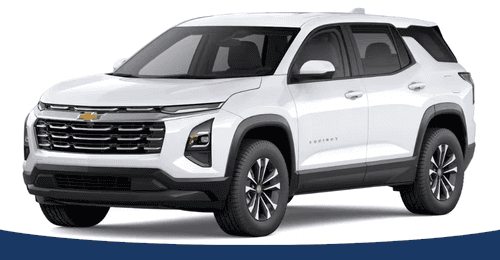
Choose the 2026 Chevrolet Equinox if you want a gas-only compact SUV with a 1.5L turbocharged engine, available all-wheel drive, a large standard infotainment screen, and a simple LT, RS, and ACTIV trim lineup.
Choose the 2026 Toyota RAV4 if you want better fuel economy, more horsepower, more cargo space, hybrid technology, and stronger towing capability in select AWD trims.
For northern New Jersey winter driving, both SUVs offer all-wheel drive, but the RAV4’s Electronic On-Demand AWD is paired with hybrid power while the Equinox offers a more traditional AWD gas-SUV setup.
For long commutes on the Garden State Parkway, I-287, Route 17, or the New Jersey Turnpike, the RAV4’s hybrid fuel economy gives it a major advantage.
For buyers who prefer a conventional gasoline engine, the Equinox is the simpler choice.
The 2026 Chevrolet Equinox is a compact crossover SUV offered in LT, RS, and ACTIV trims, and the 2026 Toyota RAV4 is a compact crossover SUV offered exclusively with electrified powertrains across a broader grade lineup. The Equinox seats five passengers and uses a 1.5L turbocharged 4-cylinder engine with 175 horsepower; front-wheel drive is standard on many configurations, and all-wheel drive is available. The RAV4 seats five passengers and is available with front-wheel drive or Electronic On-Demand AWD depending on grade. The RAV4 lineup includes trims such as LE, SE, XLE Premium, Woodland, XSE, Limited, and GR SPORT, and is offered as a Hybrid Electric Vehicle (HEV) or a Plug-in Hybrid Electric Vehicle (PHEV) depending on grade.
Several technical terms appear throughout this comparison and are defined here for clarity. A turbocharged engine uses forced air to help a smaller engine produce useful power. A hybrid combines a gasoline engine with electric motors to improve fuel economy and performance. All-wheel drive (AWD) sends power to all four wheels to improve traction in snow, rain, and low-grip conditions.
Understanding these powertrain terms makes the Chevy Equinox vs. Toyota RAV4 comparison easier to evaluate when reviewing the specification table and section-by-section analysis below.
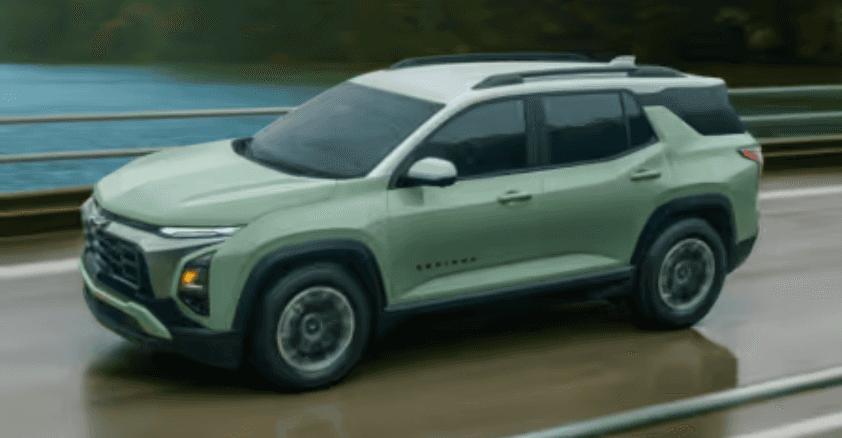
This comparison focuses on 2026 model year vehicles — the 2026 Chevrolet Equinox and 2026 Toyota RAV4 — evaluated for buyers in northern New Jersey who are actively shopping for a compact SUV. The geographic scope covers northern New Jersey communities including Paramus, Wayne, Morristown, Hackensack, Edison, Bridgewater, and Toms River, where drivers face freeze-thaw pavement, hilly side streets, steep driveways, wet leaves, and slushy roads during winter months. The use-case scope includes daily commuting on the Garden State Parkway, I-287, Route 17, and the New Jersey Turnpike, plus weekend trips to the Shore, the Poconos, and local athletic fields. The Equinox lineup is straightforward, with LT, RS, and ACTIV trims; the LT is the practical everyday trim, RS adds sportier styling, and ACTIV adds a more rugged appearance for shoppers who want a trail-inspired look. The 2026 RAV4 lineup is broader and electrified, with Core, Rugged, and Sport personalities across grades such as LE, XLE Premium, Woodland, SE, XSE, Limited, and GR SPORT, and it includes Hybrid and Plug-in Hybrid choices depending on grade.
If you want a simpler gas-SUV trim lineup, choose the Chevrolet Equinox. If you want more hybrid grade variety and performance choices, choose the Toyota RAV4.
For a fair, real-world head-to-head of the Chevy Equinox vs. Toyota RAV4, this comparison uses the 2026 Chevrolet Equinox LT AWD against the 2026 Toyota RAV4 LE AWD. Both are practical AWD compact SUV configurations rather than premium or appearance-focused models, representing the most sensible matchup for everyday shoppers. The RAV4 is a hybrid and the Equinox is gas-only, so the powertrains are not identical, but these two trims are the cleanest comparison point for buyers evaluating all-wheel-drive compact SUVs. Buyers who need a direct gas-to-gas comparison should note that the RAV4 lineup is electrified, making this hybrid-versus-gas matchup the cleanest available trim pairing.
| Category | 2026 Chevrolet Equinox LT AWD | 2026 Toyota RAV4 LE AWD | Winner |
|---|---|---|---|
| Powertrain | 1.5L turbo 4-cylinder | 2.5L hybrid 4-cylinder | RAV4 |
| Horsepower | 175 hp | 236 net combined hp | RAV4 |
| Torque | 203 lb-ft | 163 lb-ft engine torque | RAV4 for total system power |
| Transmission | 8-speed automatic | eCVT | Depends on preference |
| Drivetrain | AWD | Electronic On-Demand AWD | Tie |
| Fuel Economy | 25 city / 29 highway / 26 combined mpg | 46 city / 39 highway / 42 combined mpg | RAV4 |
| Towing Capacity | Up to 1,500 lbs | 1,750 lbs (LE AWD); select AWD trims up to 3,500 lbs | RAV4 |
| Cargo Volume | 29.8 cu ft behind second row / 63.5 cu ft max | 37.8 cu ft behind second row / 70.4 cu ft max | RAV4 |
| Passenger Volume | 104 cu ft | 98.9 cu ft | Equinox |
| Infotainment | 11.3-inch touchscreen | 10.5-inch Toyota Audio Multimedia | Equinox |
| Driver Display | 11-inch Driver Information Center | 12.3-inch digital gauge cluster | RAV4 |
| Safety Suite | Chevy Safety Assist + standard driver-assist features | Toyota Safety Sense 4.0 + Blind Spot Monitor | Tie |
| Best For | Gas-only simplicity and a large central screen | Hybrid efficiency, cargo room, and stronger output | Depends on priority |
Torque note: Toyota lists 163 lb-ft as the RAV4 hybrid engine torque figure; electric motor torque contributes to the hybrid system but is not listed here as one combined torque value.
On powertrain and horsepower, the RAV4’s 236 net combined horsepower delivers a meaningful real-world performance advantage over the Equinox’s 175 horsepower for merging, passing, and highway driving.
On torque, the table shows the Equinox’s listed engine torque of 203 lb-ft exceeds the RAV4’s listed engine torque of 163 lb-ft. However, the RAV4’s hybrid system delivers stronger total system power through electric motor assistance, making it the more capable choice in real-world driving despite the lower engine torque figure. Buyers evaluating acceleration and pulling feel should weigh the RAV4’s 236 net combined horsepower rather than its engine torque figure in isolation.
On transmission, the winner column correctly notes that preference determines the outcome. The Equinox offers a traditional 8-speed automatic transmission, which provides a familiar, conventional shift feel that many buyers already know from other gas-powered vehicles. The RAV4 uses an eCVT optimized for hybrid operation. Neither is objectively superior; the right choice depends on whether you value conventional driving feel or hybrid-optimized smoothness.
On fuel economy, the RAV4’s 42 combined mpg versus the Equinox’s 26 combined mpg translates to meaningful fuel savings for northern New Jersey commuters on the Garden State Parkway, I-287, Route 17, or the New Jersey Turnpike — particularly for high-mileage drivers in stop-and-go traffic.
For northern New Jersey winter driving, both SUVs offer all-wheel drive, but the RAV4’s Electronic On-Demand AWD is paired with hybrid power while the Equinox offers a more traditional AWD gas-SUV setup.
On cargo and passenger volume, the RAV4’s cargo advantage is substantial — 8 more cubic feet behind the second row and nearly 7 more cubic feet at maximum — making it the better choice for families, gear-haulers, and weekend travelers. The Equinox’s passenger volume advantage of 104 cubic feet versus 98.9 cubic feet is real but narrower, and matters most to buyers who prioritize cabin roominess for adult passengers over storage capacity.
On towing, the RAV4 LE AWD — the trim compared here — is rated at 1,750 lbs versus the Equinox’s 1,500 lbs, a modest but real advantage for buyers towing small utility trailers or lightweight watercraft. The more significant towing story is that higher RAV4 AWD trims can tow up to 3,500 lbs, giving buyers who anticipate heavier towing needs a clear upgrade path within the RAV4 lineup that the Equinox cannot match.
On infotainment and driver display, the Equinox wins on central screen size at this trim level, while the RAV4 wins on driver display size. Buyers who rely heavily on navigation, media, and parking cameras during northern New Jersey commutes will likely find the Equinox’s 11.3-inch touchscreen a day-to-day advantage, while the RAV4’s 12.3-inch digital gauge cluster delivers a cleaner, more modern instrument panel experience.
Both vehicles include comprehensive standard driver-assistance technology — Chevy Safety Assist on the Equinox and Toyota Safety Sense 4.0 on the RAV4.
The Equinox offers a traditional 8-speed automatic transmission, which provides a familiar, conventional shift feel that many buyers already know from other gas-powered vehicles. The RAV4 uses an eCVT optimized for hybrid operation. Neither is objectively superior; the right choice depends on whether you value conventional driving feel or hybrid-optimized smoothness.

Reliability, resale value, and long-term ownership costs are critical factors in any compact SUV decision, particularly for buyers in northern New Jersey who plan to keep their vehicle for several years and want confidence in their investment. Toyota has a strong reputation for long-term reliability and resale value, and the RAV4 benefits from that brand reputation. Chevrolet highlights J.D. Power recognition for the Equinox as America’s Most Dependable Compact SUV, giving the Equinox a stronger authority signal than a generic ownership claim; Chevrolet also offers broad service availability and a simpler gas-only powertrain in the Equinox. Both vehicles include comprehensive standard driver-assistance technology — Chevy Safety Assist on the Equinox and Toyota Safety Sense 4.0 on the RAV4.
If long-term resale value and reliability reputation are top priorities, the Toyota RAV4 is typically the stronger choice. If you want a conventional compact SUV with a recognized dependability award and widespread Chevrolet service support, the Equinox may be more appealing.
Choosing between the 2026 Chevrolet Equinox and 2026 Toyota RAV4 is most efficient when you work through a structured set of decision points rather than comparing every specification at once. Follow these steps to reach a clear answer for your situation.
Step 1: Determine your powertrain preference. Decide whether you want a conventional gas-only SUV or a hybrid. The Equinox uses a 1.5L turbocharged gasoline engine with an 8-speed automatic transmission. The RAV4 is available only as a Hybrid or Plug-in Hybrid. If gas-only simplicity is non-negotiable, the Equinox is your answer and you can stop here.
Step 2: Evaluate cargo versus passenger volume needs. If you regularly carry strollers, sports gear, luggage, or large loads, the RAV4’s 37.8 cubic feet behind the second row and 70.4 cubic feet maximum gives it a clear advantage over the Equinox’s 29.8 and 63.5 cubic feet. If you prioritize cabin roominess for passengers over cargo capacity, the Equinox’s 104 cubic feet of passenger volume edges the RAV4’s 98.9 cubic feet.
Step 3: Calculate the fuel cost impact of your commute. The RAV4 LE AWD is rated at 42 combined mpg versus 26 combined mpg for the Equinox LT AWD. For northern New Jersey commuters who regularly travel the Garden State Parkway, I-287, Route 17, or the New Jersey Turnpike, that 16-mpg combined difference can translate into meaningful fuel savings over time — making the RAV4 the stronger fuel-economy choice for high-mileage drivers.
Step 4: Assess towing requirements. If you tow a small utility trailer, small watercraft, lightweight camper, or outdoor gear, confirm whether the Equinox’s 1,500-pound capacity or the RAV4’s 1,750-pound to 3,500-pound capacity (depending on trim) meets your needs.
Step 5: Test-drive both AWD configurations. Experience the Equinox’s traditional 8-speed automatic transmission versus the RAV4’s eCVT to determine which driving feel you prefer for daily commuting and highway merging.
For northern New Jersey, the simplest fork is commute efficiency versus gas-only familiarity: long-distance or stop-and-go commuters should prioritize the RAV4, while shoppers who want conventional Chevrolet ownership should keep the Equinox high on the list.
For northern New Jersey drivers, the 2026 Toyota RAV4 is the stronger local fit for long commutes, stop-and-go traffic, frequent cargo use, and buyers who want AWD paired with hybrid efficiency — its advantage is greatest for drivers who regularly travel the Garden State Parkway, I-287, Route 17, or the New Jersey Turnpike. The 2026 Chevrolet Equinox is the better local fit for buyers who prefer a conventional gas-powered SUV, want a large standard center screen, value passenger volume, and do not need the RAV4’s hybrid fuel-economy advantage.
You want a gas-only compact SUV.
You prefer a traditional automatic transmission in AWD models.
You like the standard 11.3-inch infotainment touchscreen.
You want a straightforward trim lineup: LT, RS, and ACTIV.
You prioritize passenger volume over maximum cargo space.
You do not need maximum towing or hybrid fuel economy.
You want much better fuel economy.
You want a hybrid compact SUV.
You need more cargo space.
You want more horsepower.
You want higher available towing capability.
You expect to keep the vehicle long-term and value resale strength.
The 2026 Toyota RAV4 is the stronger universal recommendation for most compact SUV shoppers because it offers better fuel economy, more cargo room, more horsepower, and higher available towing capacity than the Chevrolet Equinox. The 2026 Chevrolet Equinox is the better choice for buyers who specifically want a simpler gas-only SUV with available AWD, a large infotainment screen, more passenger volume, and a familiar Chevrolet ownership experience. To complete your decision, consider scheduling a test drive to experience the Equinox firsthand, compare financing options for both models side by side, and evaluate dealer pricing and available incentives before making a final commitment.
The 2026 Toyota RAV4 is better overall for most shoppers because it has better fuel economy, more cargo space, more horsepower, and higher available towing capability. The Chevrolet Equinox is better for buyers who want a simpler gas-only SUV with more passenger volume.
The Toyota RAV4 gets better gas mileage. The RAV4 LE AWD is rated at 46 city / 39 highway / 42 combined mpg, while the Chevrolet Equinox LT AWD is rated at 25 city / 29 highway / 26 combined mpg.
The Toyota RAV4 has more cargo space. It offers 37.8 cubic feet behind the second row and 70.4 cubic feet maximum, compared with 29.8 cubic feet behind the second row and 63.5 cubic feet maximum in the Chevrolet Equinox.
The Chevrolet Equinox has more passenger volume. It offers 104 cubic feet of passenger volume, compared with 98.9 cubic feet in the Toyota RAV4.
The Toyota RAV4 has more horsepower. The RAV4 LE AWD has 236 net combined horsepower, while the Chevrolet Equinox has 175 horsepower from its 1.5L turbocharged engine.
The Toyota RAV4 can tow more. The Chevrolet Equinox can tow up to 1,500 pounds when properly equipped, while the RAV4 LE AWD is listed at 1,750 pounds. Select RAV4 AWD hybrid trims, such as Woodland and XLE Premium AWD, can tow up to 3,500 pounds.
For northern New Jersey winter driving, both SUVs offer all-wheel drive. The RAV4 is the stronger choice if hybrid efficiency matters during winter commuting; the Equinox is the better fit for buyers who prefer a conventional gas-powered AWD SUV with traditional automatic transmission feel.
No. The 2026 Toyota RAV4 lineup is electrified, with Hybrid Electric Vehicle (HEV) and Plug-in Hybrid Electric Vehicle (PHEV) powertrains. The Chevrolet Equinox is the gas-only option in this comparison.
No. The 2026 Chevrolet Equinox uses a 1.5L turbocharged 4-cylinder gasoline engine.
The Chevrolet Equinox LT AWD has a larger central touchscreen (11.3 inches) in the recommended-trim comparison, while the Toyota RAV4 LE AWD has a larger digital gauge cluster (12.3 inches). Higher RAV4 trims offer larger infotainment screens up to 12.9 inches and additional technology features.
The Toyota RAV4 is typically the stronger long-term value choice because of Toyota’s reliability and resale-value reputation. The Equinox may appeal more to buyers who prefer a traditional gas-powered SUV and Chevrolet service familiarity.
Pricing varies by trim, dealer, and regional incentives. The Equinox LT AWD and RAV4 LE AWD are positioned as comparable entry-level AWD trims in their respective lineups. Because the RAV4 is a hybrid and the Equinox is gas-only, buyers should factor long-term fuel savings into the total cost of ownership, not just the sticker price. For high-mileage northern New Jersey commuters, the RAV4’s fuel economy advantage can offset a higher upfront cost over time. Contact northern New Jersey dealers for current pricing and available incentives.
Northern New Jersey buyers can ask their local Chevrolet dealer about test driving and purchasing the 2026 Chevrolet Equinox, with availability serving communities including Paramus, Wayne, Morristown, Hackensack, Edison, and Bridgewater. Scheduling a test drive is the best way to compare the Equinox’s gas-powered driving feel and 11.3-inch infotainment touchscreen against the RAV4 in person.


